

The homework folder comes home on Monday, and by 6:15 the kitchen table turns into a small negotiation. Nora is six and in first grade now. Last winter, when she was still in kindergarten, the negotiation went the same way almost every night. She would look at the page, push it an inch away, and tell me she couldn't do it. Not crying. Not a fit. Just flat and certain and finished before she had started.
In January I bought a picture book called The Magical Yet, written by Angela DiTerlizzi and published by Little, Brown Books for Young Readers. It runs 40 pages in the illustrated edition, and the reading age listed is 4 to 8 years, preschool through third grade. The story is told in rhyme and it follows a child who cannot do something yet, with the Yet drawn as a friendly magical companion who stays close while the skill is still forming. It was published in April 2020. A woman I work with mentioned the title in passing, and I wrote it on a sticky note and stuck it to the side of the fridge.
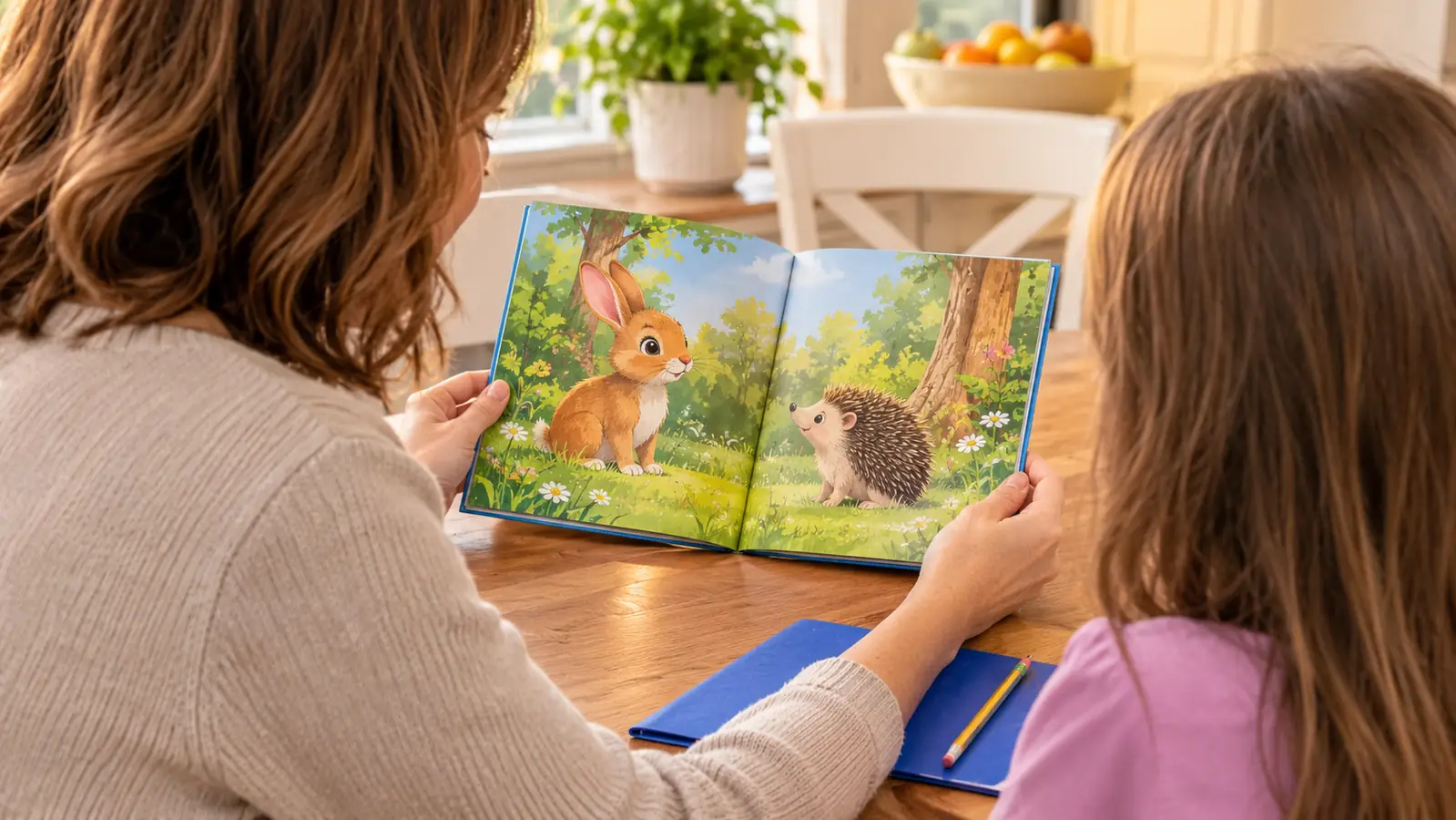
The book lives in the basket by the kitchen table now, which is where homework happens in this house. About twice a week, before Nora starts her reading page, I pull it out and read it to her. Twice a week is roughly all the routine we could hold. Some weeks it was once. It takes about seven minutes when she is settled and closer to twelve when she is not, because she stops me to ask things, mostly about the companion in the story.
The rhyme helps. I have read enough rhyming picture books to know that a bad one is a chore, because the meter limps and you find yourself putting the emphasis in the wrong place. This one reads clean out loud, which matters at 6:15 in the evening when you are tired yourself.
What surprised me was the speed. Within about two weeks she started adding the word to her own sentences. She would say she couldn't do something, and then sometimes she would tack yet onto the end of it. I did not prompt her and she was not repeating it back to me for effect. She had picked the word up somewhere in those readings and she was using it herself.
She still says she can't. About half the time now there is a yet on the end of it, and she is the one who put it there.
The book that handed my six year old the word yet
It took two weeks and about seven minutes a night. The Magical Yet is 40 pages, ages 4 to 8, and it does one small job well.
Amazon Check Today's Price on Amazon →Here is the part I have to be honest about, because I have read enough of these books now to know when I am being sold something. The Magical Yet has limits. It runs long for a tired kid. On a Thursday after a full day at school, Nora loses the thread somewhere in the middle, and I close it and we do the homework without it. The magic also takes explaining. For the first several readings she wanted to know what the Yet actually was, and I had to say, in my own words, that it was the part of her that was still learning. Once that landed, the book worked. Before it landed, it was just a story.

It also did not make homework easy. I want to be clear about that. Nora still pushes the page away sometimes. She still has nights when the folder opens and her face closes. The word yet did not remove the feeling underneath it. What it did was give her somewhere to put the feeling, so that a hard thing became a hard thing she had not learned instead of a hard thing she was bad at. That is a small shift, and it is the only shift I can honestly claim.
The other thing worth saying is who this does not suit. Eli is ten and in fifth grade, and he is well past the picture books. He rolls his eyes at all three of them, this one included, and I have stopped offering. When he needed something for math in the fall of fourth grade, he needed a different kind of book entirely. If your child is nine or older and already reading on their own, The Magical Yet will probably read as a book for little kids, because it is one.
What it does suit is a kid at the front end of something new. Kindergarten reading. A first swimming lesson. The first few weeks of a grade where the work is suddenly harder than it was. Nora was five when we started and six now, and Angela DiTerlizzi's book has stayed useful across both, which is more than I expected from something we finish in seven minutes.
I should say that I bought it myself on Amazon in January, and nobody sent it to me. That matters to me when I read a review, so I assume it matters to you.
What I'd Tell You If We Were Sitting at My Kitchen Table
I would tell you not to buy it expecting a change in your child. Buy it because you want a book that gives you a way to talk about the word yet without lecturing, and because seven minutes at the table before the folder opens is a reasonable thing to ask of a book. Read it before the homework, not after. Read it while everyone is still calm, because it does nothing for a kid who is already upset. And expect to explain the magic two or three times before it means anything. If your daughter is like mine, she will take the word and make it hers on a timeline you cannot predict, and one night you will hear her say it with no help from you at all.
If the word yet is missing at your table
The Magical Yet by Angela DiTerlizzi. 40 pages, ages 4 to 8. It did one small job in our house and it did it in about two weeks.
Amazon Check Today's Price on Amazon →