
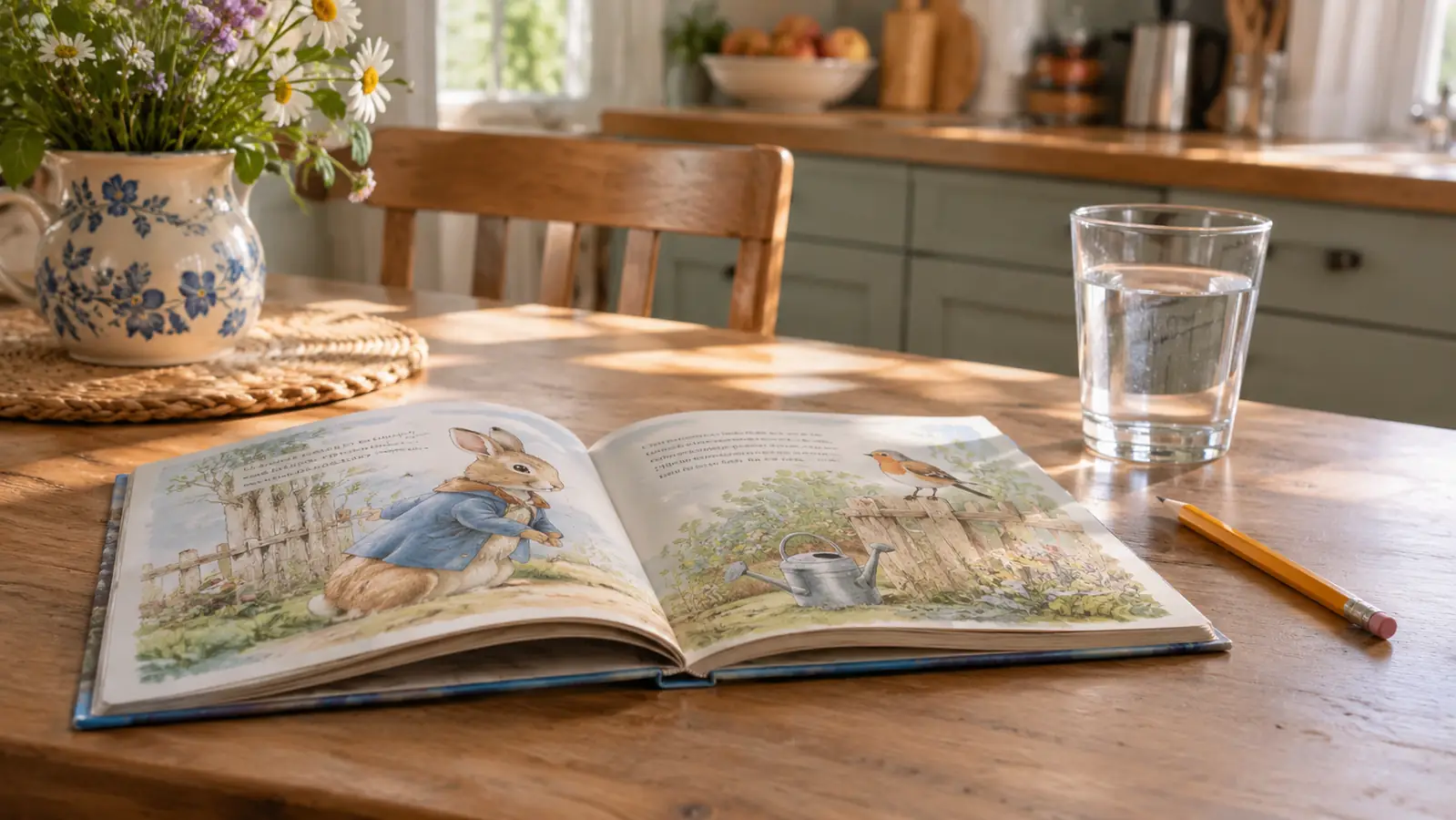
The sentence I heard most in the fall of 2025 was not a question. It was a flat 'I can't.' Nora was five and three weeks into kindergarten, and she said it about scissors, about zippers, about the letter G on her tracing sheet. I tried the usual things. I said 'yes you can' in a bright voice, which she did not believe. I did the zipper for her, which fixed nothing at all. Then a friend mentioned The Magical Yet by Angela DiTerlizzi, and I put it in my cart mostly because I had nothing else left to try.
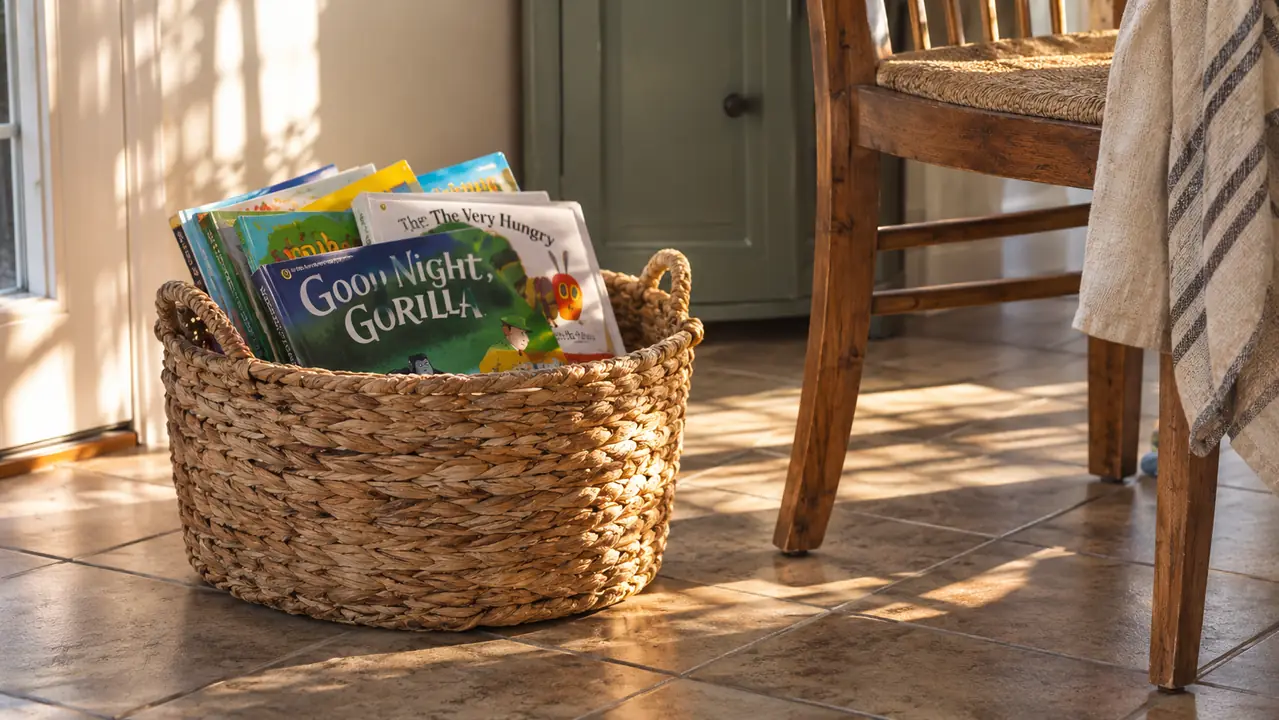
We bought it in January 2026. Ten months later it still lives in the basket beside the kitchen table, and I have read it out loud more times than any other book in this house. It is a picture book, 40 pages, illustrated by Lorena Alvarez, and it is the first of four in the series. I am not going to tell you it fixed my daughter, because it did not. What it did was smaller and more useful than that, and it holds up well enough that I can give you ten honest reasons without dressing any of them up.
The book that gave us a word to use instead of a lecture
It takes about ten minutes with the questions, and it earned its spot in our kitchen basket.
Amazon Check Today's Price on Amazon →It turns 'yet' from a correction into a companion
When I said 'yet' to Nora, it landed as a brush-off, one of those things adults say to move a kid along. The book gives her a picture to hang the word on. In the story the Yet is a friendly magical companion who turns up when a child is stuck, and Nora took to that straight away. Angela DiTerlizzi built the whole thing around one syllable, and that is the reason the word stuck with my daughter when my own repetition did not.
It belongs at the kitchen table, not at bedtime
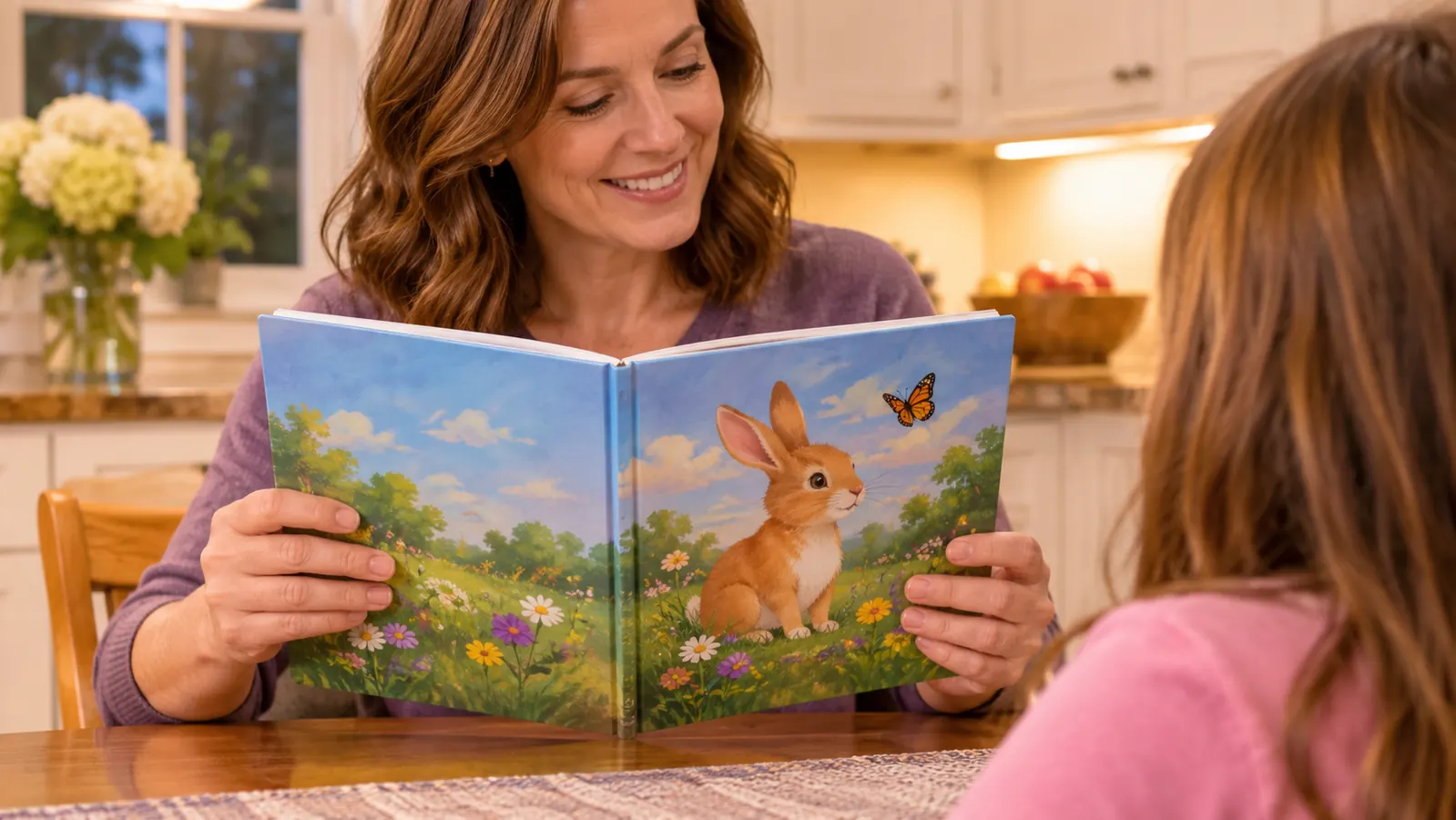
Ours is not a bedtime book. Nora has a different one for that, and it stays in her room. The Magical Yet lives in the basket by the kitchen table because that is where the reading homework happens, about twice a week, before the actual homework comes out of the folder. Reading it first was not a plan I made. It was just where the book ended up. It turned out to be the right spot, because the kitchen table is exactly where she starts announcing that she cannot do things.
The rhyme keeps a tired kid in the chair
It is written in rhyme, and that matters more than I expected. A plain sentence gives a six year old a place to stop, while rhyme keeps her mouth moving a few beats longer. On the nights Nora was worn out and I was worn out too, the sound of it carried us both to the end. I will be honest that it runs long for a tired kid. Ten minutes with the talking, and if she is already done, we close it and pick it up the next night.
It holds up across a wider age range than I expected
The listing puts the reading age at 4 to 8 and the grade level at preschool through third grade. From where I sit that is about right. Nora started it at five and still takes something from it at six. My son Eli is ten now, well past picture books, and he rolls his eyes at it. So I would not call it a book for the whole family. It is a book for that four to eight window, and it does that window well.
It gives a parent something to say that is not a lecture
Before this book, my encouragement had a lecture hiding inside it. I would say that nobody is good at something the first time, and she would hear a speech and tune out. Now I mostly point at the basket. We have a shared word and a shared picture, and four words do the work that three sentences used to fail at. I do not have to convince her of anything. She already knows what the Yet means at our table.
It gave Nora a way to finish her own sentence
The change I actually noticed was small and very specific. Within about two weeks of starting the book, Nora began adding the word 'yet' to her own 'I can't.' Some of the time. Not every time, and not on the hard mornings. Ten months in, she still says 'I can't' plenty. She just finishes the sentence differently maybe half the time, and that half is more than we had in December.
It survives being read twice a week for ten months
I have read this book more often than anything else on our shelf, and I am not tired of it. That is not nothing. Plenty of picture books are charming once and a chore by the tenth reading. Angela DiTerlizzi keeps the lines short enough to say out loud without tripping, and the rhyme gives me a rhythm to fall into. The illustrations by Lorena Alvarez give my eye somewhere to go while my mouth does the work. Ten months in, it has held up better than the book Nora asks for at bedtime.
The pictures give us something to point at
Nora stops on pages and asks about what she is seeing. That is useful to me, because it lets her talk about being stuck without talking about herself directly. If I ask why she is upset about the tracing sheet, I get a shrug. If I ask about the kid in the picture, I get a real answer. I am not a counselor and I do not try to be one. I just take the opening when a book hands me one.
It gets the conversation done before the folder opens
We read it before the homework folder comes out. That order is deliberate now, because by the time the worksheet is on the table, the mood is already set. If the first thing that happens is a hard page, the whole evening tilts. If the first thing that happens is a book about being stuck, the worksheet is just the next thing instead of the whole night. It is a small structural trick and it has saved us a lot of Tuesdays.
It works as a routine, not as a rescue
No single reading of this book has ever fixed a bad night. What has helped is that it is in the basket, it is twice a week, and it is not a big production. Ten months of one small repeated thing beats a single earnest talk, at least in this house. If you are after a book that makes a child stop saying 'I can't' by Friday, this is not that book and neither is any other. If you want a habit that shifts the sentence over a season, this is the one we kept, and DiTerlizzi is the reason we have the habit at all.
What I'd Skip
I would skip the assumption that the idea explains itself. The magic takes some explaining the first few times, and our first two readings were mostly me answering questions about how the Yet works while Nora waited. I would also skip it on a night when your child is already past their limit. It runs long, and a tired kid will tell you so. And if your child is nine or ten and reading on their own, this is the wrong shelf entirely, which is exactly what happened with Eli.
Within about two weeks, Nora started finishing her own sentence with 'yet.' Some of the time. Not every time.
The book that gave us a shared word for being stuck
40 pages, about ten minutes with the questions, and it lives in our kitchen basket. Your results will look like mine did: partial, slow, and worth it.
Amazon Check Today's Price on Amazon →