
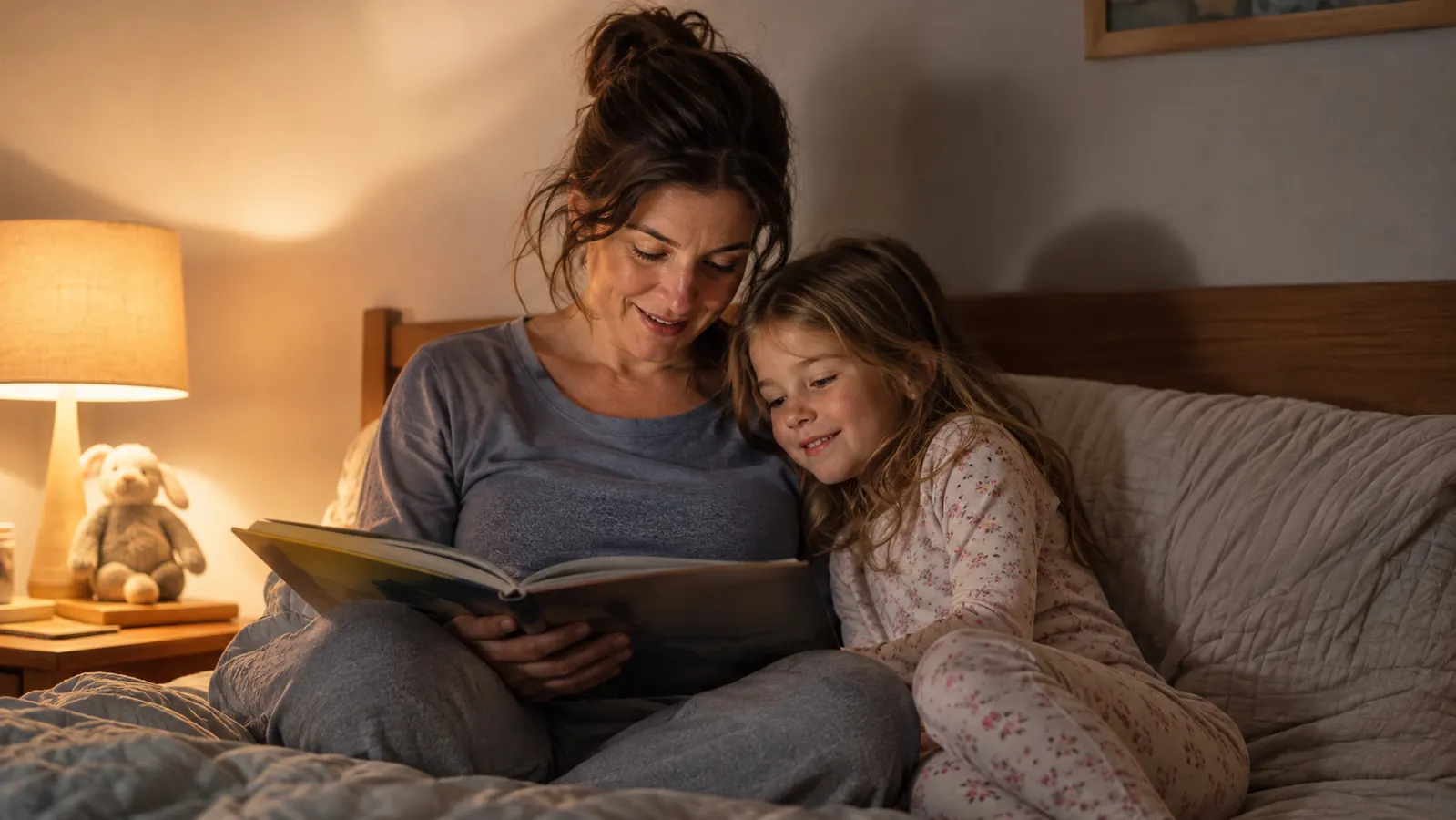
Nora was five the autumn she started telling me she couldn't do things. Not big things. Tying a shoe. Cutting a straight line with scissors. She would get about four seconds into something new, hand it back to me, and say she was not good at it, and then she would go quiet in a way that was worse than crying. I am not a counselor and I was not looking for a book to fix her. I was looking for something to read at bedtime that was not about a bear.
In September 2025 I ordered I Am Enough by Grace Byers, illustrated by Keturah A. Bobo. It came as one copy in a regular Amazon box. Fourteen months later it still lives on Nora's shelf and we still read it about three nights a week, in her room, with the lamp on and her teeth already brushed. This is what that book actually did in our house, and where it does very little.
The Quick Verdict
A short rhyming poem about liking yourself, not a story. Worth owning for a child of three to seven who takes words in quietly, and close to useless on a night when your kid needs a plot to stay in the room.
Amazon Check Today's Price →The words landed better from the book than they ever did from me
I Am Enough is 32 pages and takes under five minutes aloud, listed for ages 3 to 7. It is the shortest thing on Nora's shelf and the only one she still picks on her own after fourteen months.
Amazon Check Today's Price on Amazon →How I've Used It
The book arrived in September 2025, when Nora was five and a few weeks into kindergarten. I did not have a system. I put it on the shelf next to the library books, and the first night she picked it, and then she picked it again two nights later, and somewhere in there it stopped being a new book and became the book. It is not a long read. I have never once looked at the clock in the middle of it, and I cannot say that about the other picture books in her room.
The routine is boring and specific, which is why I trust it. She picks it about three nights a week. I read it aloud, start to finish, and it takes under five minutes. Mark does not read it, not because he is against it but because bedtime is my job in our house and he is usually still getting his boots off by the door at that hour. It is not our school morning book and it is not our homework book. It is the last thing she hears before the light goes off.
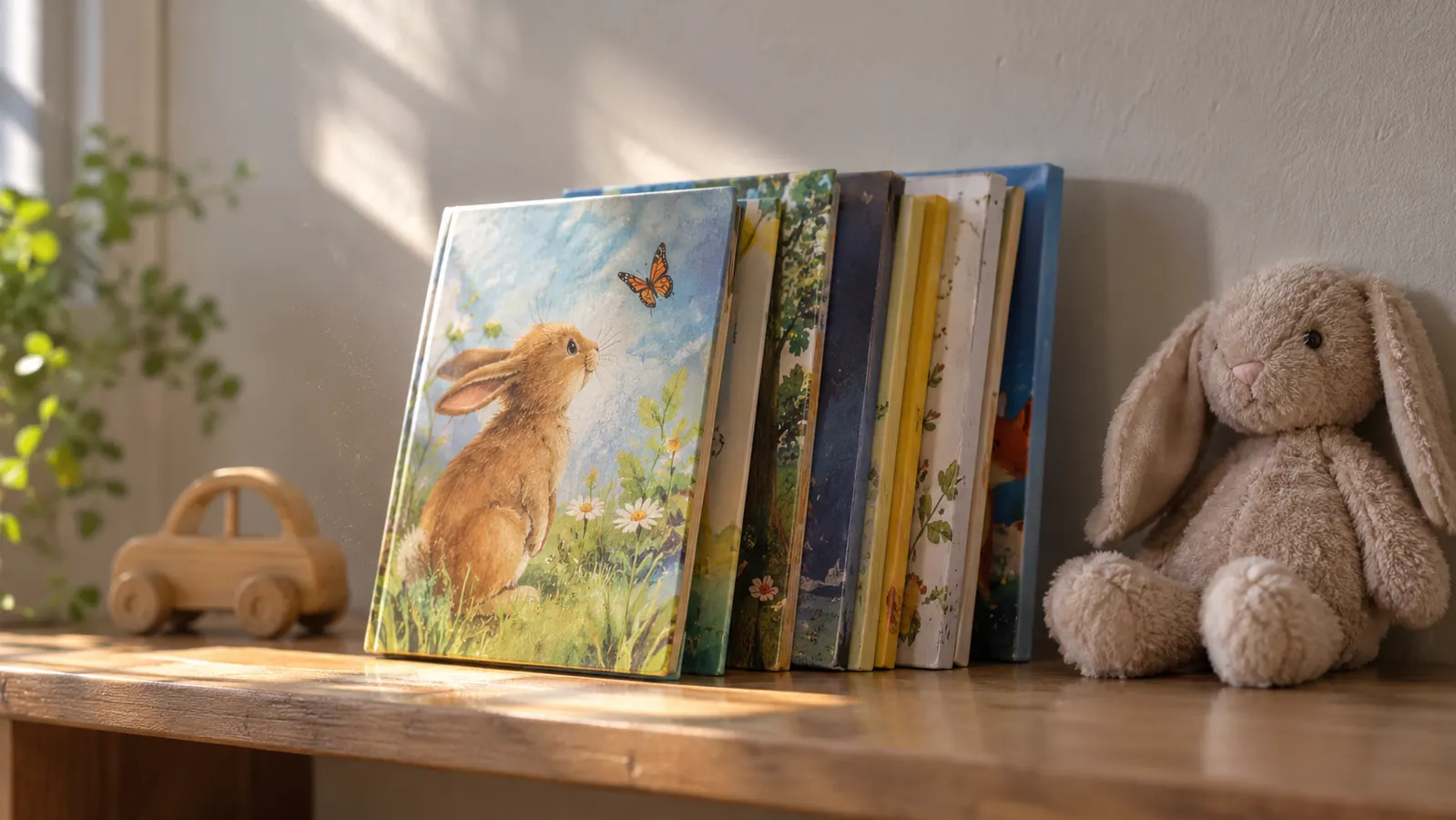
I can tell you exactly where it sits. Second shelf of the bookcase in Nora's room, at the left end, beside a stack of library books that rotates every three weeks or so. The 10.1 inch square is wider than the paperbacks around it, so the edge sticks out past the rest by a finger's width, and that finger's width is how I find it in the dark when she asks for it after the lamp is already off. It has been read in a hotel room in Columbus and once, memorably, on the hallway floor outside the bathroom while she waited out a stomach bug. It travels well because it is short.
I should say what we were reading before. Ordinary library picture books, whatever looked good on the hold shelf that week. I owned no other self-esteem book and no other kids' journal at that point. This one came first, before I understood I was going to end up with five of them, and it has stayed in the same spot on the same shelf for fourteen months, which is longer than anything else in her room has survived.
What's Actually Inside
The physical book is 32 pages, published by HarperCollins in March 2018, and it measures 10.1 by 10.1 by 0.6 inches and weighs 14.7 ounces. That is a square book and it is heavier than it looks, which matters when a child is holding it on her lap and matters more when it slides off the bed at 8:40 at night. The listed reading age is 3 to 7 and the listed grade level runs preschool through third. That range is honest, and I will get to why in a minute.
The 14.7 ounces is not a number I would normally bother mentioning, but I have now held this book at chest height with one arm and turned pages with the other more times than I can count, and I feel the weight in a way I never feel it with the thin paperbacks Nora has. The corners of our copy are still square. There is one small dent on the bottom edge from the night it went off the bed, and after fourteen months of a six year old handling it, that dent is the entire damage report.
Content-wise, I Am Enough is a rhyming poem about liking yourself, being kind, and respecting other people. It has no plot. There is no character who wants something, does not get it, and tries again. It is a series of statements in verse, illustrated by Keturah A. Bobo, and it ends roughly where it started. If you are expecting a story because the subtitle uses that word, adjust the expectation before you buy. Byers wrote a poem, and the poem is the product.
I am not going to describe a specific spread, because that is how a review ends up inventing details nobody can check. What I can tell you is what happened at the page level in our house. On some pages Nora looked at the picture and not at the words. On other pages she asked what a word meant. There was no page where she laughed out loud. There was also no page she asked me to skip, which for a five year old is a real compliment.
What Changed, and How Slowly
Around Thanksgiving 2025, so about two and a half months in, Nora said something kind about herself without being asked. It was small. She had finished something and instead of handing it over for a verdict, she said she did a good job. I wrote it on the back of a grocery list because I did not want to be the person who claims a book changed her child and then cannot produce a single instance. That grocery list is the instance.
There was one afternoon in January 2026 that I keep coming back to. She was trying to write her name across a line of ruled paper and it kept sliding downhill, and she put the pencil down and said she was bad at writing. I did not reach for the book. I said the thing I always say and it did nothing, and she went and sat on the stairs for a while. That night she pulled I Am Enough off the shelf herself. I read it, I did not bring up the afternoon, and neither did she. I am not going to tell you the book handled that. I am telling you she asked for it on that particular night, and I noticed.
Here is the honest part. It did not fix anything. She still had mornings where the shoes were impossible and afternoons where she came home flat. There were weeks we read it four times and weeks we did not open it. If you are buying this to solve a specific fear or teach a specific skill, it will not do that. What it did was hand her a set of sentences that did not come from me. Praise from a parent gets discounted at some point. A line in a book does not, because the book is not invested in her being fine.
Byers gets credit for the language and I get credit for the repetition. Three nights a week for fourteen months is roughly two hundred readings. That is a lot of exposure for a book under five minutes long, and I think the repetition is most of the mechanism. Any decent book read two hundred times will put something in a child's head. This one happens to be putting in something I actually want her to have.
Three nights a week for fourteen months is about two hundred readings. That is the whole method. There is no other method.
Where It Falls Flat
The no-plot problem is real on a wiggly night. Nora is six now and she is a good listener, but on a night after a long day she will be upside down on the bed by the fourth page and I will be reading a poem to the ceiling. A story gives a tired child a reason to stay upright. A poem gives her nothing to hold onto except the sound of my voice, and some nights the sound of my voice is not enough.
The wiggly nights have a pattern, which helps. They come after days with a lot of screens, or days when she has been out at Mark's mother's in Columbus and comes home over-tired and loud. On those nights I have learned to read whatever she asks for, even when it is not this. The other thing I got wrong for the first few months was speed. I read it at story pace, and a poem read at story pace sounds like a list. Once I slowed down and let the lines sit for a second, the stopping and explaining got shorter, not longer, because she was actually hearing the words instead of waiting me out.
The second issue is the language. The rhyme is written for the whole 3 to 7 range, which means parts of it are pitched at the top of that range and sail right over a five year old. You can read straight through and let it wash, or you can stop and explain, and stopping turns a four minute read into an eight minute conversation. Both are fine. Neither is what the book does by itself. It assumes you will do some of the work.
And it is thin on anything for an older child. Eli is ten, in fifth grade, and he is past all three of the picture books on Nora's shelf. He looked at I Am Enough exactly once, the day it arrived, rolled his eyes, and handed it back. That is not a knock on Byers. A 32 page poem listed for ages 3 to 7 is not supposed to hold a ten year old. But if you are buying one book for two kids four years apart, know which kid it is for.
What I Liked
- Under five minutes aloud, which means it actually gets read on a school night
- Sturdy 10.1 by 10.1 inch square format that has survived fourteen months on a six year old's shelf
- Gives a child words for self-talk that do not come from a parent
- Listed reading age of 3 to 7 leaves years of room to grow into it
- Short enough that a tired adult will not bargain their way out of reading it
Where It Falls Short
- No plot, so it loses a wiggly child around page four
- Parts of the rhyme sit above a five year old's vocabulary and need explaining
- Almost nothing in it for a child past seven or eight
- It is a poem and not a conversation, and it needs you to add the conversation
- The square format is heavier than it looks if a child tries to hold it alone
How We Read It, Which Is Probably Why It Worked
I do three things that are not in the book. I read it slower than I want to. I stop on one page, not every page, and ask Nora one question about the words, usually something like whether she has ever felt that way, and I let her answer be short. And I do not turn her answer into a lesson. The second I start explaining, she stops listening and starts waiting for me to finish. The book is better at this than I am, and my job is mostly to stay out of its way.
We also skip it plenty. If she asks for something with a story, we read something with a story, and I do not make a thing of it. Reading a book out loud because it is good for you, in front of a child, is a fast way to make sure the child stops wanting it. The nights we read I Am Enough are the nights she picks it, and after fourteen months she still picks it about three nights a week.
Who This Is For
This suits a parent or grandparent of a child roughly three to seven who will sit for four minutes of verse, in a house where bedtime is the reading window and there is not another one. It suits a child who takes words in quietly and then produces them weeks later, which is Nora. It suits a family willing to stop and talk on the pages that do not land. And it suits the adult who is tired of being the only voice telling a small child she is fine as she is, because there is something useful about those words arriving from a book that is not yours. Byers wrote the thing I could not get my own daughter to hear from me.
Who Should Skip It
Skip it if your child needs a plot to stay in the room, because this has none. Skip it if you are shopping for a child of eight or older, because there is nothing here for them and they will tell you so at the first reading. Skip it if you want a workbook, a set of prompts, or a script for a hard conversation, since this is a poem and will not do that work. And skip it if you know you will read it straight through without stopping, because read that way the rhyme slides past a five year old and almost nothing sticks.
If bedtime is your only reading window, this is the one that fits inside it
Fourteen months on Nora's shelf and roughly two hundred readings later, it is still the book she reaches for. 32 pages, listed for ages 3 to 7, done in under five minutes.
Amazon Check Today's Price on Amazon →