
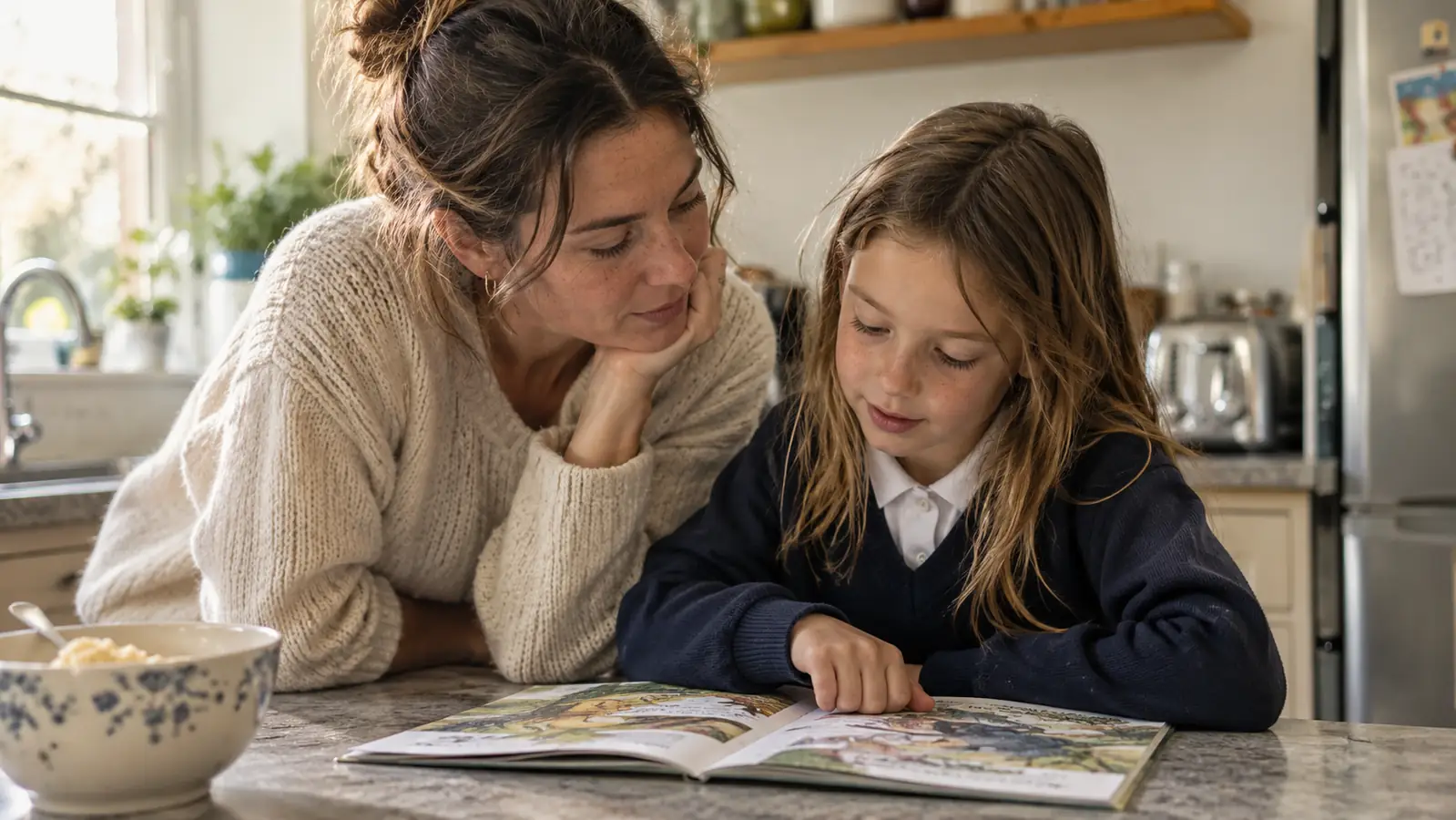
By the fourth week of kindergarten, Nora had one sentence she used for everything. I can't. Not good at it. She said it about buttons and about scissors and about the letter N. I did the thing parents do, which is tell her she can, in a bright voice, about nine times a day, and it did not move anything. So I started buying books instead of arguing with a five year old. Two of them ended up in the same conversation for me. One is I Can Do Hard Things by Gabi Garcia, which I bought in August 2026, the week before first grade started. The other is Don't Feed the WorryBug, which I never bought at all. I read it twice to Nora from a library copy. Here is what I think each one is actually for.
The short version. If the trouble is the morning itself, the shoes and the coat and the walk to the door, the Garcia book is the one I would buy again. It is built for that ten minutes and it does not ask anything of a kid who is already wound up. If the trouble is a worry that follows your child around all day and needs a name, the WorryBug book does something the affirmation book cannot, because it puts the worry outside the child where she can point at it. Different jobs. Neither one is the better book.
What Each Book Actually Is
I Can Do Hard Things is 36 pages from Skinned Knee Publishing, illustrated by Charity Russell, listed for ages 3 to 7, and it measures 8.5 by 8.5 inches, so it sits flat on a counter without flopping shut. It is a book of affirmations. There is no story, no character to follow, no plot that resolves on the last page. Each page is a short line about getting through a hard moment, and you can open it anywhere, read two pages, and close it. That is exactly what we do. I keep it on the kitchen counter and not on the shelf, because a book on a shelf does not get opened at 7:20 in the morning.
Don't Feed the WorryBug is the opposite shape. It is a picture-book story, and the premise is right there in the title, a worry that grows the more you feed it. That is about all I will say about the inside, because I read it twice from the library and I am not going to pretend I know it the way I know a book I have read forty times. What I can tell you is what it did in the room. Nora sat still for the whole thing, both times, which is more than I can say for a lot of what we read after dinner. And when it was over, she had something to talk about that was not herself.
That is the real difference, and it took me a while to see it. The Garcia book talks to the child. The WorryBug book gives the child a character to look at while the feeling gets discussed. One is a pep talk you can hand over in four minutes. The other is a conversation you have to be present for. If your evenings are as short as mine, that difference matters more than which one has the better reviews online.
| I Can Do Hard Things (Garcia) | Don't Feed the WorryBug | |
|---|---|---|
| Format | 36 pages of short affirmations, one idea at a time, no story | A picture-book story built around a single worry |
| Best time of day | The ten minutes before school, a page or two at breakfast | Bedtime or a quiet afternoon, cover to cover |
| Holding a wiggly kid | Harder. Nothing pulls a child toward the next page. | Easier. There is a story to follow. |
| Time per sitting | A few pages in under five minutes | One whole story, longer than a school morning allows |
| Naming the worry out loud | Talks about hard moments in general, not worry in particular | Puts the worry on the page as something a child can look at |
| The exact moment of trying | Written for that moment directly | Arrives sideways, through the story |
| Listed reading age | 3 to 7 years | Picture-book shelf, roughly the same years |
| Repeat reads | Short bursts, three mornings a week, months of it | Whole-book repeats, less often |
| Useful to a nine or ten year old | Not much. It is written for the younger end. | Still a picture book, so the same ceiling |
On the first day of first grade she held my hand all the way to the door and walked in anyway. That is what the book is for. It did not take the nerves away.
How We Used Each One at Home
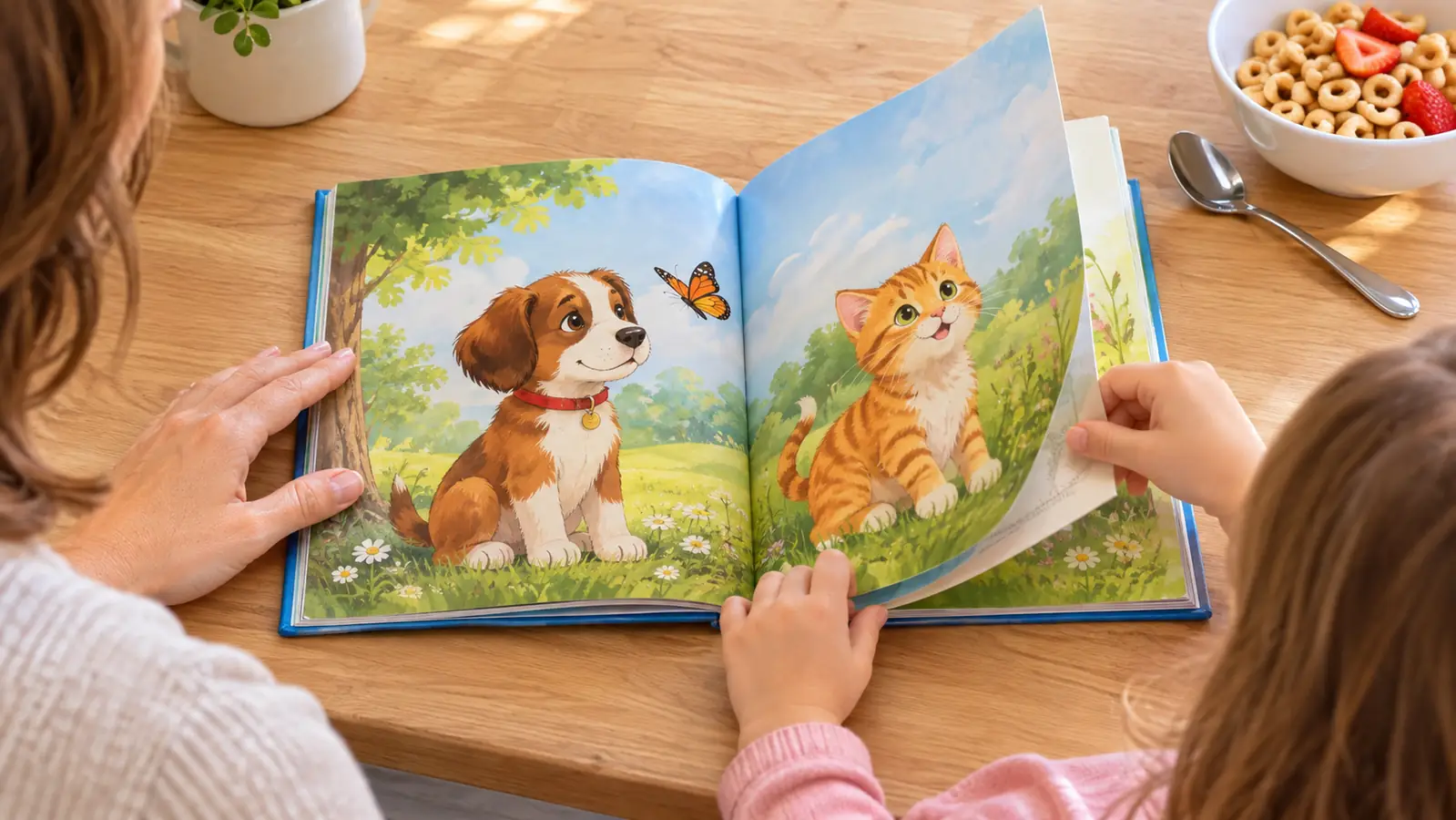
I bought I Can Do Hard Things the week before first grade started, and I want to be honest about what it did on day one. Nora was nervous. She held my hand all the way to the door of the building and then she walked in. The book did not remove the nerves. Nothing was going to remove the nerves, and any book that promises to is selling you something. What it did was give us a script for the two minutes before we left the house. I read two pages. She listened. Then we put shoes on. Three mornings a week, that has been the routine since August, and it has held.
The WorryBug book came into the house much later, and only for a couple of nights. I borrowed it because a friend at the dental office asked whether it was worth buying for her son, and I do not like answering that question without having read the thing myself. So I read it aloud twice. It is a longer sit than our morning book, and I would not attempt it at 7:20 with coats already on. It is a bedtime book, or a Sunday afternoon book. It wants a parent who is not also making lunches and hunting for a missing shoe.
Here is the part I did not expect. After the second read, Nora asked for something else. Not because it frightened her, she was fine, but because once was enough for her at six. The story had done its job and she was ready to move on. That is not a knock on the book. It is a fact about how we used it, as a one-time conversation starter rather than a nightly ritual. If you want a book that gets read forty times in a year, this was not that book in my house.
Where I Can Do Hard Things Wins
It fits the moment. Most of the trouble with a nervous six year old happens in a narrow window, the twenty minutes between breakfast and the car, and almost every children's book is the wrong size for that window. They are bedtime length. They need a lap and a quiet room and a parent who is not holding a hairbrush. I Can Do Hard Things is the rare one you can read standing up, with one shoe on, and still reach the end of. A few pages, under five minutes, done. That is not a small thing. A book that does not get opened does not help anybody.
It also does not require me to perform. The WorryBug book needs a voice and a lap and a child who is settled enough to follow a plot. The Garcia book needs me to read a line and then be quiet. On a morning when I am already running late for the front desk, that is the difference between reading something and skipping it. And because there is no story, there is nothing lost if we only get through two pages. We are not abandoning a plot halfway through. We read two lines about hard things, and we put our shoes on.

Where Don't Feed the WorryBug Wins
It gives a child something to point at, and the affirmation book simply does not have that. When a worry is inside a kid, it is formless. She cannot tell you what it is because it does not have edges yet. A story about a worry, with the worry drawn as a thing that eats, hands her a shape to use. Nora could say 'that one' and mean the feeling. I have never once gotten that out of an affirmation. Affirmations tell a child what to think. Stories let a child name what she is already feeling, and naming comes first.
It holds attention. The only reason I finished it twice was that there is a story pulling us forward, and a wiggly kid will sit for a story in a way she will not sit for a list of statements. If your child is the kind who has to be inside a narrative before anything lands, one reading of a story like this will do more than a month of breakfast lines. That was not Nora. She is a short-burst kid and she does better with three lines and a kiss on the head. But I have met plenty of children the story would fit better.
What Neither Book Will Do
Neither book fixed anything, and I want to be careful here, because this is where children's book reviews get soft. Nora is still a kid who would rather not try new things. She had a rough morning last week over a zipper. The difference is small and it is real: she says 'this is hard' more often now instead of 'I can't'. That is a change in wording, not a change in personality, and I will take it. If you are buying either book expecting a different child by Christmas, save your money and your hope for something else.
Neither one is written for an older kid either. I Can Do Hard Things is listed at 3 to 7 years and that feels right to me. The WorryBug book is a picture book, so it lands on the same shelf, whatever the listing says. My ten year old would not carry either one around. That is not a flaw in the books. It is just the honest boundary of the format. Past about eight, you are looking at a different kind of book entirely, the kind a kid reads alone in his room.
The short one is the one that actually gets read on a Tuesday morning
36 pages, ages 3 to 7, and small enough to sit flat on the counter where a kid will see it. I have kept it there since August and it is the only book in this comparison that gets opened three mornings a week.
Amazon Check Today's Price on Amazon →Who Should Buy Which
Buy I Can Do Hard Things if your child's hard moment has a time on the clock. School mornings, Sunday nights before the week starts, the ten minutes before a lesson she does not want to go to. If you need something short, portable and repeatable that a wound-up kid can absorb while putting on shoes, this is the one, and it is the one I own and would buy again. Gabi Garcia wrote it for exactly that child, the one who is already at the door with her coat on.
Borrow Don't Feed the WorryBug first if the trouble is not a moment but a mood. If your child carries a worry around all day and cannot tell you what it is, a story that draws the worry as a creature gives her something concrete to work with, and that is worth a library trip before it is worth a purchase. Read it yourself before you read it to her. Some kids want to talk about it afterward and some kids are done after one sitting, and you will know which one you have by the middle of the book.
And if you have both kinds of child, which is most houses, do not buy both at once. Borrow the WorryBug book first, watch what your kid does with it, and spend the money on the short one. The short book is the one that gets used on a Tuesday when nobody has time and everyone is already late. The story book is the one you get out when something is actually wrong and you have the evening to sit with it.
Start with the book that fits in a school morning
Affirmations, not a story, so a nervous kid can take two pages and still get somewhere. Listed for ages 3 to 7 and rated 4.7 out of 5 across more than 6,000 reviews on Amazon.
Amazon See Today's Price on Amazon →