

The first morning of first grade, my daughter Nora held my hand the whole way to the classroom door. She did not let go until a teacher she had never met said her name out loud. Then she let go, and she walked in. That is the whole story. Nora is six. She spent most of kindergarten saying I can't and I'm not good at it about anything new, and I spent the summer before first grade looking for something I could put in front of her at breakfast that was shorter than a pep talk and less tiring than me. What I landed on was I Can Do Hard Things, the affirmation book by Gabi Garcia.
I bought it myself, one copy, in August 2026, the week before school started. It has lived on our kitchen counter next to the fruit bowl ever since. Three months in I have read it aloud maybe thirty times, and I can tell you what it has done for us, what it has not done, and where it stops being useful.
The Quick Verdict
Short, plain affirmations that gave my six-year-old a sentence to hold on a hard morning. It is not a story and it is not a fix, and it runs out of road for kids past about seven.
Amazon Check Today's Price →The book we read before the shoes go on
Thirty-six pages and about two minutes, aimed at ages 3 to 7. It is the one title on our counter that earns its place on a rushed school morning.
Amazon Check Today's Price on Amazon →How I've Used It
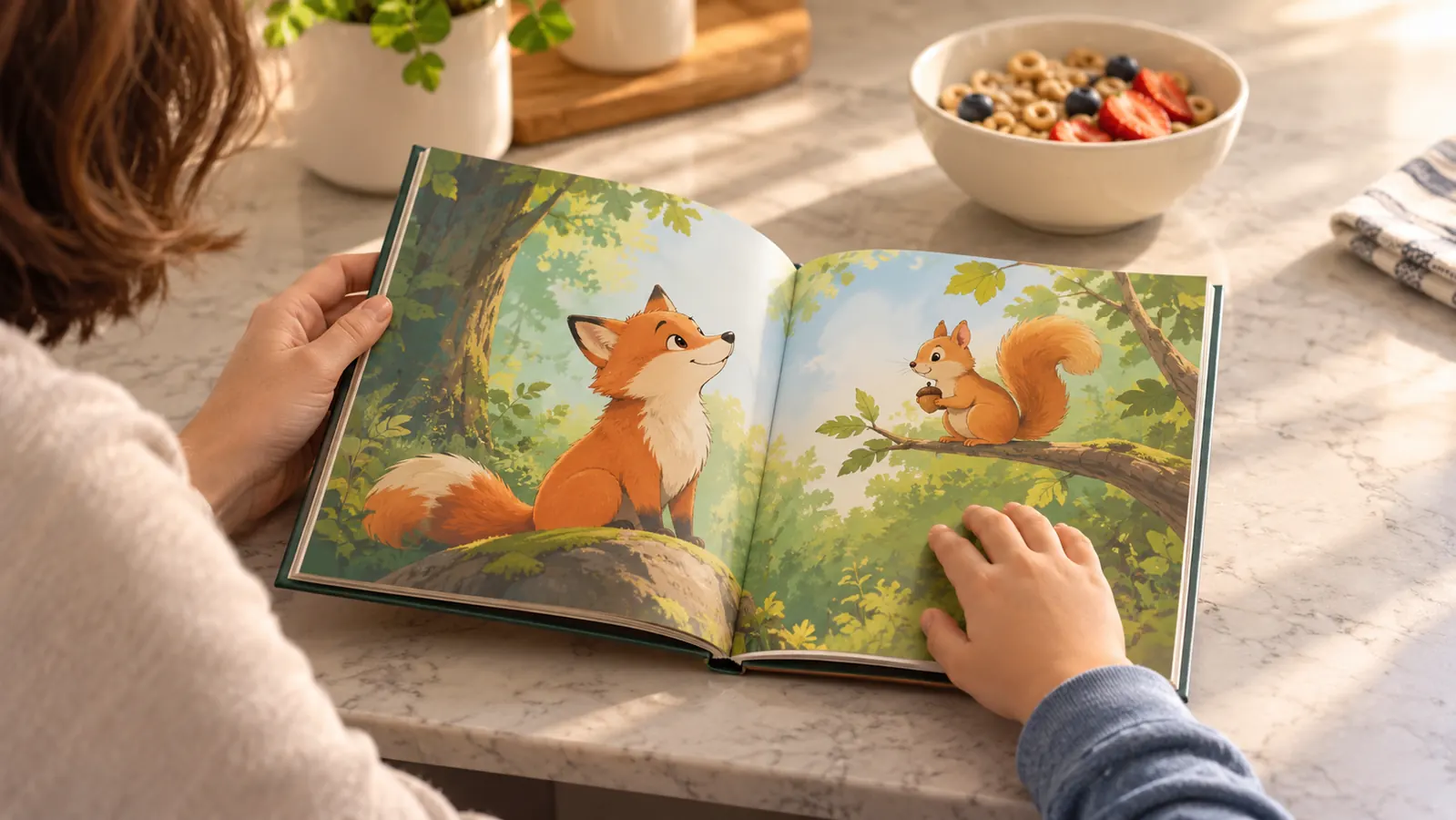
We do not read it cover to cover. I want to say that up front, because I know how these routines go in other houses and I am not going to describe a version of ours that does not exist. On a school morning I pull two or three pages, whichever ones Nora points at, and I read them out loud while she works through a bowl of cereal. That is the entire ritual. It takes about two minutes and then we are arguing about socks like everybody else.
Two minutes is the whole reason this book survives here. The Magical Yet, which we read on homework nights, is a proper story and it needs a proper sitting. This one does not. On a morning when the shoes are already a problem, a two-minute book is the only kind of book that gets opened at all. Anything longer turns into one more thing I am nagging her to do before we leave.
The copy is 8.5 by 8.5 inches and about a quarter of an inch thick, so it lies flat on the counter and I can keep one hand free. That sounds like a small thing to care about. When you are pouring milk and looking for a hairbrush at the same time, it is not small at all. It also slides into the tote bag by the door without bending, which is how it has survived three months on a busy counter.
We have taken it in the car too. Mark's mother lives in Columbus, about an hour and ten minutes away, and there is a stretch of highway where the only thing that works is a book small enough to hand over the seat back. This one has done a couple of those drives. It has also done a couple of afternoons in the waiting room at the dental office where I work, on days Nora comes with me and every magazine on the table is for adults. It travels better than I expected, which is not why I bought it and has turned out to be half of why it stays out.
Eli is ten, in fifth grade, and completely past it. He rolls his eyes at the cover and goes back to his toast. I expected that. This is Nora's book the way the journal in the kitchen drawer is his. I read to her, he reads to himself, and nobody crosses over.
What's Actually in the Book
I Can Do Hard Things is 36 pages, published on September 12, 2018 by Skinned Knee Publishing, illustrated by Charity Russell, and listed for reading ages 3 to 7. Gabi Garcia built this book entirely out of short affirmations about getting through a hard moment. There is no character to follow, no plot to resolve, and no page you have to reach back through the book to make sense of. You open it, you read a page, you turn it, you read the next one.
That structure is either the point or the problem, depending on your kid. Because nothing is pulling her forward, Nora has never once asked for one more page the way she does with a story book. She has also never got lost, because there is nothing to keep track of from one morning to the next. For a child who is already wound tight before school, that flatness is a feature. For a child who needs to be entertained into a message, it is not.
The writing is short and plain and it holds up being read out loud, which matters more than it sounds. I have read picture books where I could hear myself going flat halfway through a sentence, and once I go flat the book is finished for that morning. Garcia keeps the lines short enough that I can say them the way I would actually say them, and after thirty readings I have not tripped over one on the way out the door.
What Three Months of School Mornings Actually Changed
Here is the honest version. On the first day of first grade, Nora was still nervous. She held my hand to the door, let go, and walked in. The book did not take the nerves away and I am not going to tell you it did. What it gave her was a sentence to hold while the nerves were happening, and at six years old that is most of what you can offer anyway.
Instead of I can't, she now says some version of this is a hard one. Then she does it. I have heard it about the buckle on her sandals, about a page of reading homework, and once about walking into a birthday party where she did not know a single child. None of that is confidence in the big sense. It is vocabulary, and vocabulary came first for her.
The other thing that changed was me. For most of a year I had been saying you'll be fine in about nine different tones of voice and none of them worked. Now I have a page to point at. I say, we read about this, remember, and it lands better than anything I was improvising at the counter. Some of that is the book and some of it is that a routine she can predict beats a sincere speech every single time.
What has not changed is that she still has rough mornings. Last week she did not want to go at all, and the book sat there closed while she cried about her socks. I put it away and sat with her instead. No book is more useful than a hug on that kind of morning, and I would rather she learn that feelings get company than learn to recite her way past one.
The Parts That Fell Flat
It is thin. Thirty-six pages of short affirmations is not much book, and after three months we have cycled through everything in it more times than I can count. There is nothing new to find on the fifteenth read. With a story book, Nora spots a different detail in the corner of an illustration every few weeks and the book stays alive. Here there is nothing to spot.
It runs out of road for older kids, and the listing is honest about that with a reading age of 3 to 7. Eli is ten. He would not sit through this for anything. If your child is in third grade or above, this is the wrong shelf, and there are two other books on ours that did far more for a ten-year-old.
On a genuinely bad morning it does not work at all. I have tried. When Nora is already upset, handing her a book of affirmations reads to her as though I am trying to talk her out of a feeling she is entitled to. That is a fair read on her part. Those mornings need a lap and a minute, not a page.
And the repetition wears. Three mornings a week for three months is a lot of the same short lines, and some days I hear myself going through the motions and I know she can hear it too. That is a ceiling on the format Garcia chose rather than a fault in the writing. It just means this will not be the last thing you buy for this job.

Where It Fits Against the Other Books We Own
We own two other picture books in this lane and they do different jobs, which is why all three are still in rotation. I Am Enough lives on Nora's shelf and gets read at bedtime about three nights a week. The Magical Yet lives in the basket by the kitchen table and comes out on homework nights. Garcia's book is the school-morning one, and nothing has crossed over.
From the library I borrowed Don't Feed the WorryBug, I Like Myself! and The Dot, one at a time, and read each aloud to Nora once or twice. My plain impression: Don't Feed the WorryBug is the most specific of the three about one particular feeling, which makes it the most useful if that feeling is the thing taking over in your house. I Like Myself! and The Dot are both bigger, louder books about liking yourself and about trying, and Nora enjoyed them. None of them took over the breakfast slot, because none of them are two minutes long.
For an older child the two that actually got traction in our house were different in kind. Eli's journal is a five-minute daily practice at the kitchen table, and You Are Awesome is a book he reads on his own, in pieces, over a couple of months. Both are pitched well past the picture-book stage. If you are shopping for a nine or ten year old, start there instead of here, and save this one for the next small child in your life.
What I Liked
- Short enough to actually finish on a school morning, about two minutes for two or three pages
- Plain, readable language that holds up to being read aloud thirty times without going flat
- Gave my six-year-old a phrase for a hard moment instead of a flat I can't
- 8.5 by 8.5 inches and thin enough to lie flat on the counter and slide into the bag by the door
- The listed reading age of 3 to 7 is honest, and the listing does not oversell what it is
Where It Falls Short
- No story, so it never pulls a wiggly kid forward into the next page
- Thin at 36 pages. We ran out of anything new within the first few weeks
- Nothing here for a child past about seven
- On a genuinely bad morning it does not land at all
- Three readings a week makes the repetition go stale
She does not chant it like a slogan. She says this is a hard one, and then she does the hard one.
Who This Is For
This is for a parent or grandparent of a child roughly three to seven who has started saying I can't before anything new. It suits a child who is about to start something: a new class, a new school, a first swim lesson, a first sleepover at a grandparent's house. It suits a household that can hold a small routine, three mornings a week, five minutes including the cereal. And it suits a child who does not need a plot to stay interested, which is a smaller group than it sounds.
It also works as a book for the adult to keep out, because the lines are the kind of thing I need to hear at seven in the morning as much as Nora does. I have said a couple of them to myself at the counter while the toast went cold. That is not why I bought it. It is why I have not put it in a drawer.
Who Should Skip It
Skip it if your child is eight or older. The reading age here is 3 to 7 and that is the job it was built for, and Eli would tell you the same thing with a sigh. Skip it if your child needs a story to stay inside a book, because there is no story to hold onto here.
And skip it if you are looking for something that fixes the thing. A book does not fix a nervous kid and this one does not claim to. I am a mom who works part time at a dental office front desk, not a teacher or a counselor, and if you have been worried about your child in a way that has lasted for months, a picture book is not the answer to that. Talk to your pediatrician or your school. This is a breakfast ritual, and it should stay one.
If your kid says I can't before anything new, this is where we started
36 pages, ages 3 to 7, and short enough for the worst morning of your week. Three months in, it is still sitting on our kitchen counter.
Amazon Check Today's Price on Amazon →