
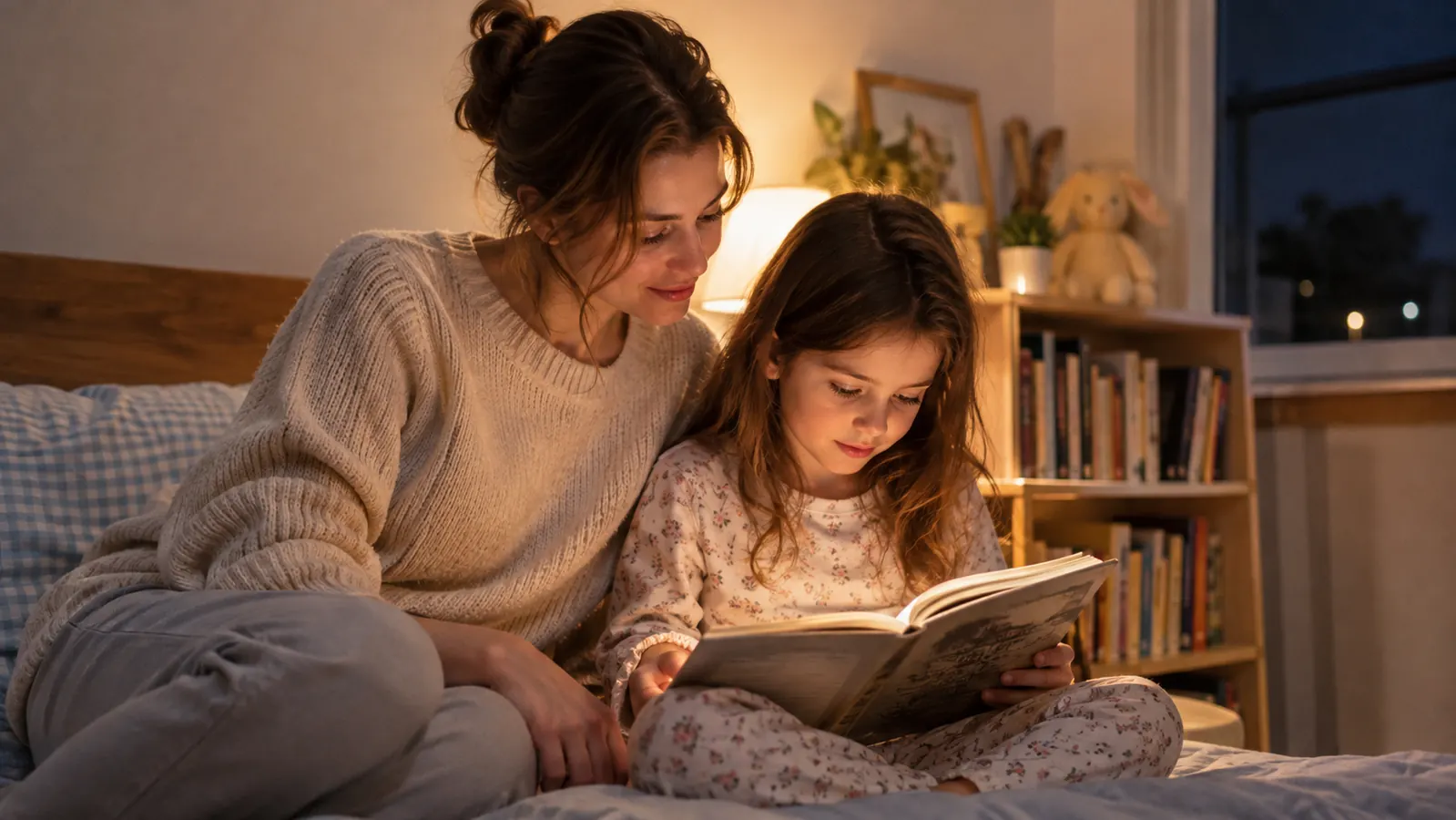
Nora is six. For most of kindergarten her answer to anything new was the same small pair of sentences, said flat, before she had tried anything: I can't, and I'm not good at it. There was no bully, no diagnosis, no teacher meeting, no counselor. She was a small kid in a new room finding out that some things do not come easily, and she had decided the safest move was to quit early. I work the front desk at a dental office in Dayton, Ohio. I am not a teacher, not a librarian, not a counselor, and I do not give advice about children other than my own. I read aloud every night and I buy books one at a time when something at home sends me looking. That is how Grace Byers's I Am Enough ended up on Nora's shelf in September 2025, and it is why fourteen months later I walked into the Dayton public library and checked out I Like Myself! by Karen Beaumont, to find out whether I had picked the right book or only the first one I found.
Here is the short answer before the long one. If your reading happens at bedtime and your child is the kind who needs the day to end quietly, I Am Enough is the one I would buy again with my own money. It is a short rhyming poem about liking yourself, being kind, and respecting other people, it runs under five minutes at our house, and it is still on Nora's shelf and still asked for about three nights a week. If your child is the wiggly one, the one who treats sitting still as a chore and needs a laugh before they will settle for anything, I Like Myself! does that job better. They are not the same tool. One winds a kid down. One wakes a kid up. Knowing which one your house actually needs is most of the decision.
One note on what I am and am not comparing. I own exactly one copy of the Byers book, bought by me, not a gift. I have never owned I Like Myself!. I borrowed it, read it aloud to Nora once, maybe twice, and took it back. So everything I say about that one is a first-impression read and not a year of living with it, and I will keep saying so. Everything I say about I Am Enough comes from fourteen months of reading it in a small bedroom with the lamp on, roughly three nights a week, while a child who was five when we started and is six now decides whether to listen.
| I Am Enough (Byers) | I Like Myself! (Beaumont) | |
|---|---|---|
| What it is | A short rhyming poem about liking yourself, being kind, and respecting others | A bouncy picture book about liking yourself, built to get a laugh |
| Story or no story | No plot. It is a poem, read start to finish in one voice | Moves fast and plays for laughs, which pulls a kid along |
| Bedtime wind-down | Calm enough to be the last thing that happens before the lamp goes off | Better in daylight. It wakes a kid up, it does not settle one |
| Holds a wiggly kid | No. On a restless night she is gone by the third page | Better, since it has more silly energy |
| Places to stop and talk | Plenty. The poetry needs explaining, and that is where the good talk happens | Fewer. It rolls, and rolling is the draw |
| Read-aloud length | Under five minutes, 32 pages | One sitting as well, and it moved faster at our house |
| Best age range | 3 to 7 per the listing, preschool through third grade | Roughly the same picture book years |
Where I Am Enough Wins
What the Byers book does that the library book did not is slow the room down. The whole thing is a poem, so it has a rhythm to read to, and on a night when I am tired and Nora is tired that rhythm does a lot of the work for me. It is 32 pages and 10.1 by 10.1 inches, which means it sits open flat on a lap and there is no page fighting at the end of the day. Under five minutes, start to finish, and then the lamp goes off and we are done. A bedtime book has one job at our house and that is to be the last calm thing that happens. This one is. I have read it after a nine hour shift and I have read it while half asleep and it still comes out sounding like a book, which I cannot say for everything on that shelf. Before this, bedtime was two songs and a negotiation. In October 2025 I tried a chapter book instead and gave up after a week, because Nora was asleep by the second page and I was reading to myself in the dark. The poem fixed that. It is short enough that she hears the end of it.
The second thing it does is put other people in the same sentence as liking yourself. Kindness and respect sit in the book alongside the self part, so when we stop and talk about a page, the talk is not only about Nora. It gave me language I did not have before for saying out loud that how she treats her brother is part of the same idea as how she treats herself. That is not what I bought it for. I bought it for the I can't problem. But it turned out to be the part I use most, because a six year old who feels good about herself and is unkind to her brother is not an outcome any of us are after.
What it actually did, honestly. By around Thanksgiving 2025, about three months in, she started saying something kind about herself now and then, unprompted, out of nowhere, with nobody fishing for it. One night in February 2026 she reached the last page and said, out loud, that she liked her own hair. Nobody had asked her. I wrote it on the back of a grocery receipt because I did not want to be the mother who forgets the one thing that worked. It happened once that month, and maybe a dozen times since, spread thin across a year. That is the whole of the result and I am not going to dress it up. She still says I can't. She said it last week about a jar lid. A book does not remove a habit, it hands a kid a second script, and sometimes she picks it up and sometimes she does not. The flaws are just as real. There is no story, so on a wiggly night it will not hold her. And the poetry goes over a young child's head unless you stop and explain it, which means you are not only reading, you are talking, and that costs you the minutes you thought you were saving.
Where I Like Myself! Wins
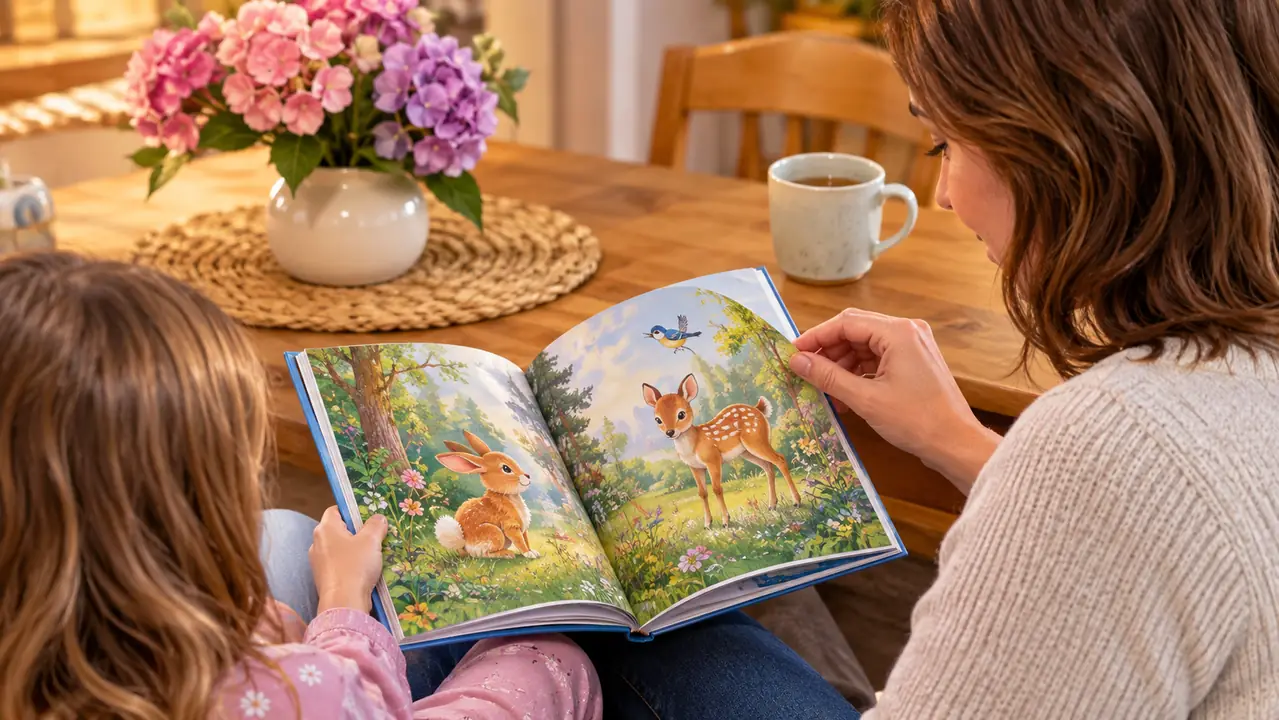
The Beaumont book moves. That was the first thing I noticed reading it aloud on the living room floor, and it is the reason I would hand it to a different parent than me. It is bouncy and silly and it goes for a laugh, and Nora laughed, which is more than a poem about self-respect got out of her on a first read. I read it on a Tuesday afternoon in October 2026, on the living room rug, with the library copy still stiff inside its plastic sleeve. Nora was up on her knees the whole way through, leaning in for the pictures, and she asked me to go back twice. If your child is the one who slides off the couch halfway through page two, momentum is not a nice extra. It is the whole thing. A book that gets read because it is fun beats a better book that gets abandoned, because the book that gets abandoned is not doing anything at all.
The other thing it wins on is being honest about what it is. It is a daytime book. I read it in the afternoon, with a library copy in my lap, and it would have been a bad fit at 7:40 at night with the lamp already dimmed. That is not a knock on it. It means the two books answer different questions. I Am Enough answers, how do I want this day to end. I Like Myself! answers, how do I get a kid who will not sit still to sit still. If your house reads in the morning before school or on the floor after snack, the second question is the one you actually have, and no amount of calm poetry will solve it for you.
Where I have to be careful is the long game. I cannot tell you how I Like Myself! holds up over a year of repeats, because I read it once and took it back. I cannot tell you whether the silliness wears thin by the twentieth read, which is the test every picture book eventually has to pass, and I am not going to pretend otherwise to fill out a paragraph. What I can tell you is that a library card is the cheapest way to find that out, and it is exactly what I did before I spent anything on the one I kept. Two reads is enough to know whether a book fits your kid's temperament. It is not enough to promise you a year.
One winds a kid down. One wakes a kid up. I needed the first one and did not know it until I had read the second.
What I Liked
- Reads in under five minutes, which is what bedtime in a real house has room for
- The rhyme gives you a rhythm to read to, even on a night when you have nothing left
- It puts kindness and respect next to liking yourself, so the talk afterwards covers both
- Fourteen months in it is still on the shelf and still asked for about three nights a week
Where It Falls Short
- There is no story, so on a restless night it will lose her by the third page
- The poetry goes over a young child's head unless you stop and explain it
- It is a bedtime ritual, not a repair. The I can'ts did not disappear
The bedtime book, not the daytime one
32 pages of rhyme about liking yourself, being kind, and respecting others. Under five minutes a night, and still the one she asks for fourteen months later. If your reading happens at bedtime, this is where I would start.
Amazon Check today's price on Amazon →
Who Should Buy Which
Buy I Am Enough if your reading happens at bedtime and your child is three to seven and will sit for a poem. That is the listing's own range, preschool through third grade, and it matches what I saw in my own house: it landed with Nora at five and it still lands at six. Buy it if you are willing to stop on a page and talk, because the book will not do the explaining for you and the talk is where the value is. Buy it if you want the kindness part carried in the same breath as the confidence part, which I did not know I wanted until I had it. Do not buy it expecting the I can'ts to stop. They will not, and if that is the deal you need, no book on this shelf is going to sign it.
Buy or borrow I Like Myself! if your child is the mover. If they need a laugh to unlock sitting still, if your reading time is after school on the floor rather than at night in a bed, that book is built for a job the Byers book does not do and does not try to do. I would borrow it first, the way I did, and see whether the bounce is a one-time hit or something they ask for again next week. That is a five minute test with a library card and it will tell you more than any review, mine included. What I can say is that I understood why so many parents reach for it about thirty seconds into reading it out loud.
Skip both if your child is nine or ten. My son is ten and he is past these. He rolls his eyes at the picture books on his sister's shelf and he is right to, they are not written for him. He read two pages of I Am Enough over my shoulder in the spring and asked me why it keeps repeating itself. That is a fair question from a ten year old, and it is also the answer to whether the book is for him. Skip I Am Enough if your child needs a plot, a character, and something happening on every page, because there is none of that here and reading it differently will not add any. And skip it if you want a book to do the work by itself. It is a poem you read out loud and then talk about. The talk is the part that stuck at our house. The talk is also the part you have to show up for, three nights a week, for months, with no guarantee that anything visible happens by Thanksgiving.
If bedtime is your reading time, this is the one we kept
Grace Byers's I Am Enough has been on Nora's shelf for fourteen months and it is still the book she asks for about three nights a week. 32 pages. Under five minutes. A calm end to the day.
Amazon See it on Amazon →