
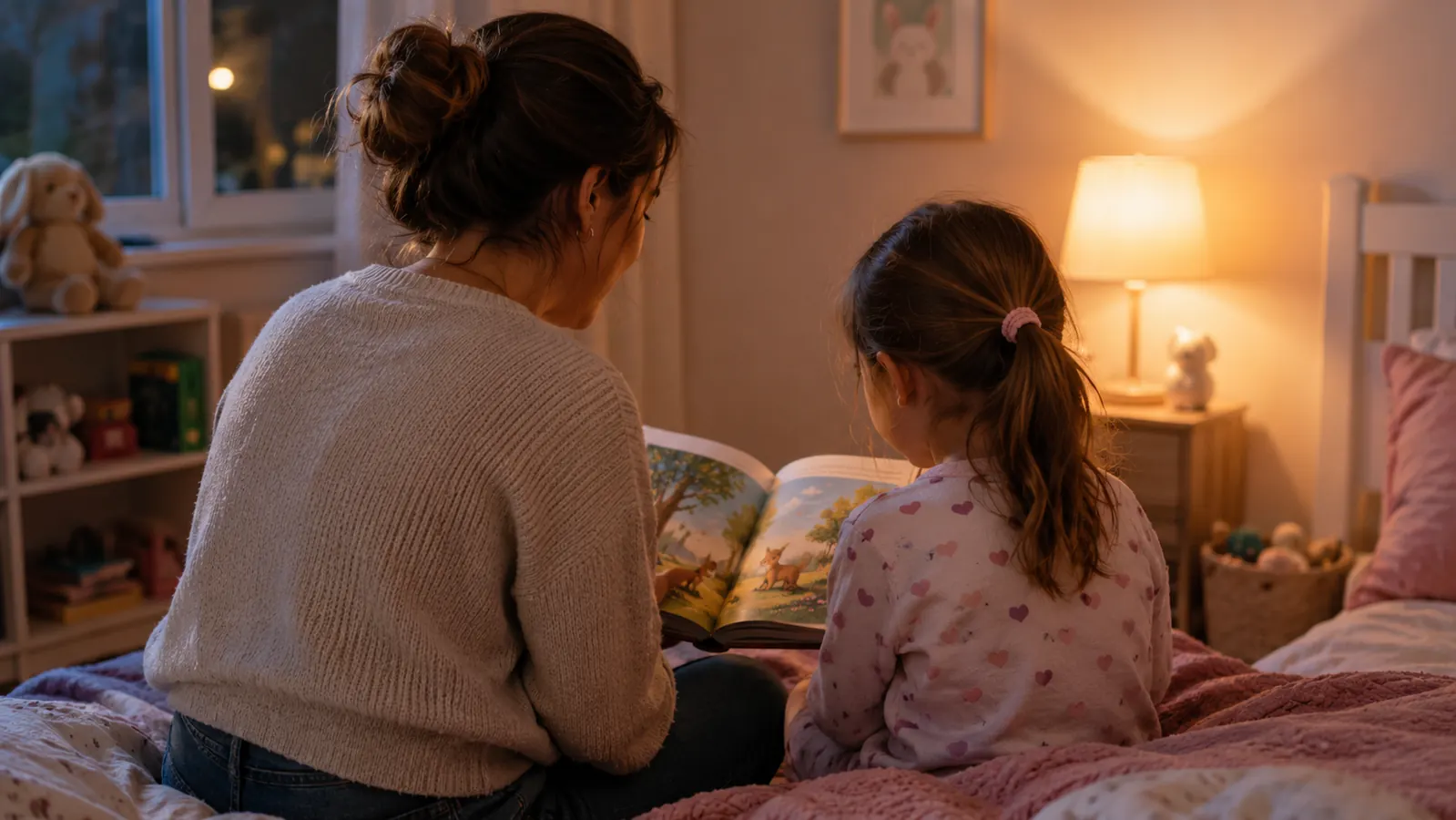
Nora was five the September I brought home I Am Enough by Grace Byers. She had started kindergarten a few weeks earlier and had come home saying 'I can't' about nearly everything new. I can't do the buttons. I can't do the scissors. I can't do the monkey bars. Nothing dramatic had happened to her. Nobody was unkind to her. She was just a small kid meeting a lot of new things in the same month, and her first answer to all of it was no. I am a mom in Dayton, not a teacher and not a counselor, so what I had on hand was a bedtime routine and a library card. I bought the book myself on Amazon that month, one copy, and I read it to her in her room about three nights a week. Fourteen months later it still lives on her shelf.
Here is what I did wrong first, because I think most parents do it. I treated the book like a fix. I read it and then I asked her, brightly, whether she knew she was enough. She said yes, because she was five and I was the one asking. Nothing changed. The other thing I tried was general praise, the you're so smart, you're so good at that kind, and that did not help either. It made her look at me like I was grading her. What actually worked was smaller and slower than either of those. It was reading the book as a book, in the same chair, at the same time of night, and then talking about it the way you talk about any story. That is the whole method, and the rest of this is the detail.
The book that earned the bedtime slot in our house
Thirty-two pages, under five minutes, and short enough that a tired six year old will still sit through it. That is exactly why it worked for us.
Amazon Check Today's Price on Amazon →Step 1: Put It in the Bedtime Stack, Not the Lesson Stack
I Am Enough is a short rhyming poem about liking yourself, being kind, and respecting other people. Byers wrote it, Keturah A. Bobo illustrated it, and the whole thing runs 32 pages in a square format about ten inches on each side. It takes under five minutes to read out loud. That length is the entire reason it worked for us. It slotted in where a story would go, between teeth and lights out, and it never announced itself as a lesson.
If you sit a child down and say we are going to read this book about self-love, you have already lost. Nora is six now and she would still smell that from the next room. The book only works when it is just the next book. So pick a time that already exists in your day, bedtime or breakfast or the ten minutes after bath, and put it there and leave it there. Ours is three nights a week, not every night. Three is enough to keep it familiar and few enough that it does not turn into wallpaper.
One practical note about the object itself. It is a large square hardcover, ten point one inches by ten point one inches by six tenths of an inch thick, and it weighs close to fifteen ounces. That is fine on a lap and awkward on a narrow shelf. We keep it flat on its own spot rather than in the bin with the paperbacks, because it gets bent at the corners otherwise. A book that gets wrecked stops getting read, and this one is sturdy enough to survive a few years if you do not stack things on it.
Step 2: Stop at the Words That Float Past Her
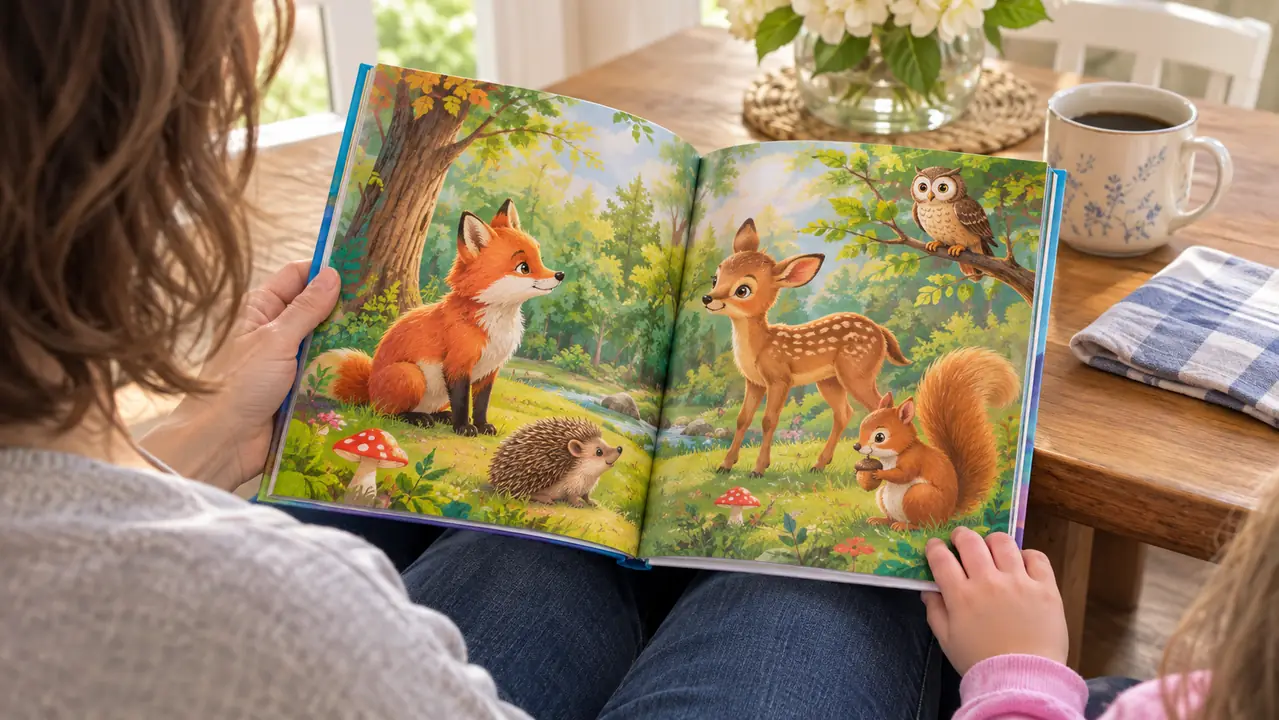
The poetry goes over a small child's head. I want to say that plainly, because a listing will not tell you and glowing reviews will not either. The rhyme is doing work a five year old cannot hear on the first pass, and if you read it straight through at speed your kid will enjoy the sound and get nothing else out of it. I stop. There are a couple of pages where I keep my finger in the book and ask her what she thinks that part meant. Sometimes she has an answer. Sometimes she says she doesn't know and we keep going.
This is also why the book does not hold a wiggly kid. There is no story. Nobody is in trouble, nobody goes anywhere, and nothing gets solved at the end. On a night when Nora was wound up and flipping around on the bed, the poem slid right off her. I learned to read the room first. If she was too fizzy, we read something with a plot and saved this one for the next night. That is not a flaw in the child or in the book. It is just what a poem can and cannot do at a quarter to eight at night.
The stopping is the part people skip, and it is the part that turns a read-aloud into a conversation. Two or three extra questions per read is plenty. You are not teaching a unit. You are just making sure the words land somewhere before the light goes off.
Step 3: Let Her Be the One to Say the Kind Thing
The change I actually noticed was quiet and I nearly missed it. By around Thanksgiving of 2025, so roughly two months in, Nora started saying something kind about herself without anybody asking. Not every day. Not on cue. Just once in a while, walking to the car or putting her shoes on. I made myself not make a big deal of it. If you throw a parade every time a kid says something good about herself, she learns that it is a performance for you. I said something small like I like that, and then let it go.
The temptation is to prompt. Say the line, honey. Tell me one thing you're good at. I did that at first and it produced a recital, not a habit. The point of the book is that the words are already in her head from hearing them, and the job is to leave room for them to come back out on their own. Reading the same short poem three nights a week is how the words get in there. It is dull. It is also the entire mechanism, and there is no faster version of it.
If your child is older than seven, this is probably not the book. The reading age on the listing is three to seven years and I would agree with that range. Eli is ten and he rolls his eyes at all three of the picture books on Nora's shelf, this one included. That is not the book failing. It is the wrong tool for a ten year old, and he needed something he could read alone, which is a different job entirely.
Step 4: Tie It to Something That Already Happened That Day
A poem about liking yourself stays abstract until you attach it to a real Tuesday. I started doing this without much thought and it turned out to be the most useful part of the whole routine. After we read, I would name one thing from her actual day. Not a compliment, a fact. The way she kept at the zipper on her coat when it stuck. The way she asked the kid at the park if he wanted a turn. Then I would leave it there and turn out the light.
Be careful with this one. If every fact you name is praise, you are back to the grading thing. Some nights I named something small and boring. Some nights I named something that did not go well and we talked about it for ten seconds before she rolled over. The book gives you the vocabulary and the day gives you the material. Neither one does much by itself, and together they do a little.
Step 5: Skip the Night It Is Not Landing
Some nights it does not work. I have read this book to a child who was upside down on the mattress, and I have read it to a child who was furious about a hairbrush and not about to be talked out of it. On those nights you close it and pick something else. Forcing a book about self-respect into a power struggle is a good way to teach a kid that the book is a chore. It is thirty-two pages. There will be another night, and probably a better one.
The other thing I would say is do not measure it week to week. I could not have told you in October of 2025 whether anything was happening at all. It was only looking back at Thanksgiving that I could see the change, and the change was small. Both of my kids still have rough days. Nora still says I can't sometimes, usually when she is tired. The book did not remove that. It gave her a different sentence to reach for on the days she is willing to reach.
What Else Helps
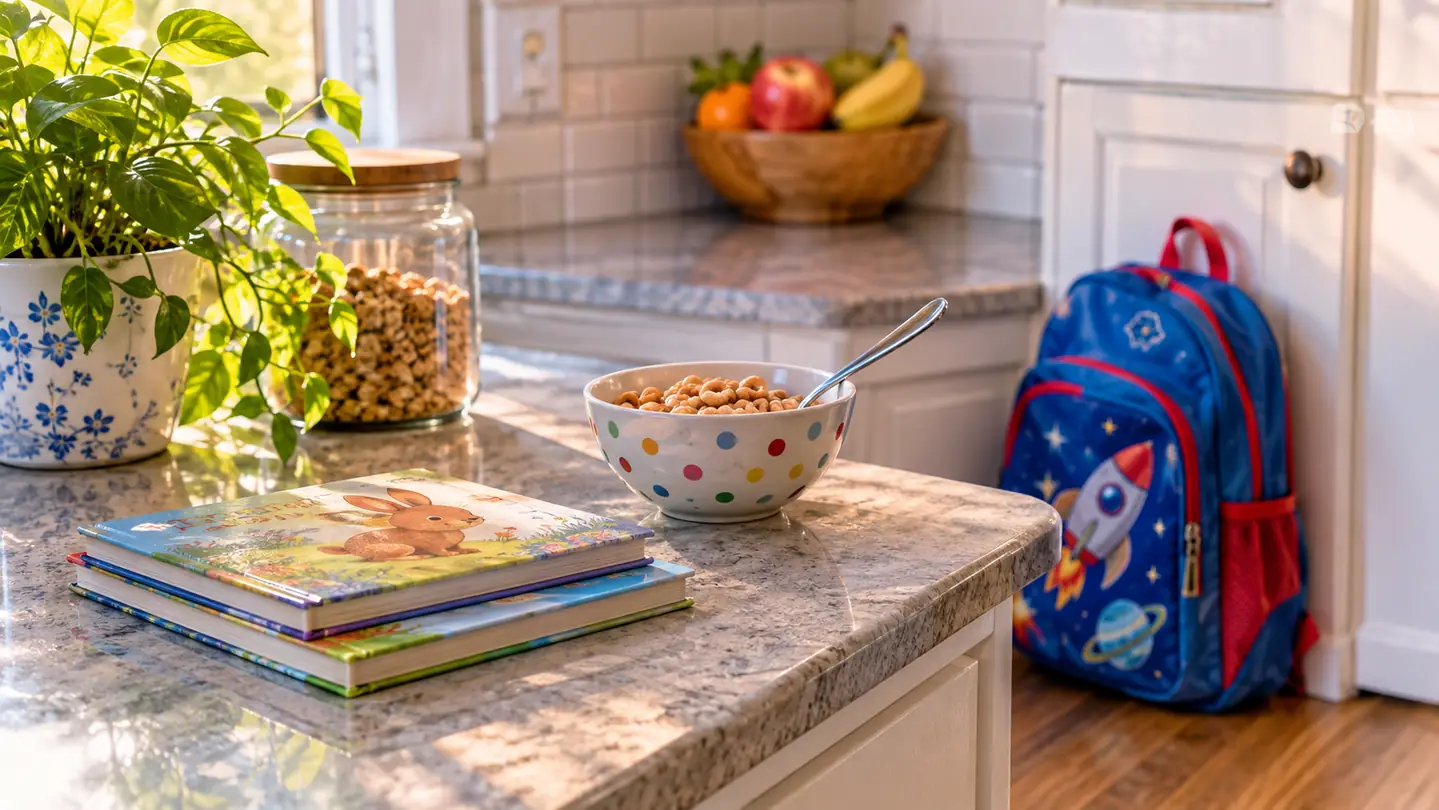
I Am Enough is not the only thing on Nora's shelf and I do not think any single book should be. We added The Magical Yet for reading homework nights, because the word yet is a different tool than the words I am enough, and the homework table is where she needed it. Within about two weeks of starting that one she was tacking yet onto the end of I can't, some of the time. I Can Do Hard Things came home the week before first grade started and lives on the kitchen counter for school mornings. Different job, different room, different book. I Am Enough stayed where it started, which is bedtime.
What all three have in common is that they are short and they are read out loud by a person who is not making a face about it. That is the part I would tell any parent to protect. A book read once with a lecture attached does less than the same book read for the ninth time while somebody is half asleep in a chair. If you are choosing a place to start, start with whichever one fits a slot you already have. For us that was the last ten minutes of the day, which is why Byers got the bedtime slot and the other two got the harder parts of the morning.
It also helps to read the book once by yourself, alone, before you try it on a kid. I did not do that the first time. I read it cold, out loud, at bedtime, and stumbled over the rhythm. Ten minutes on a Sunday afternoon would have told me where the stops were and saved us both a clumsy week.
By around Thanksgiving of 2025, two months in, Nora started saying something kind about herself without anybody asking. Not every day. Just once in a while, walking to the car.
If you take one thing from this, take the dull one. Same book, same chair, same time of night, three nights a week, for a couple of months, and let the words get in without demanding a report back. That is what moved in our house, and it moved slowly enough that I almost did not notice it happening.
Start with the one that fits a slot you already have
For us it was the last ten minutes of the day. Thirty-two pages, under five minutes, and it still lives on Nora's shelf fourteen months later.
Amazon Check Today's Price on Amazon →