
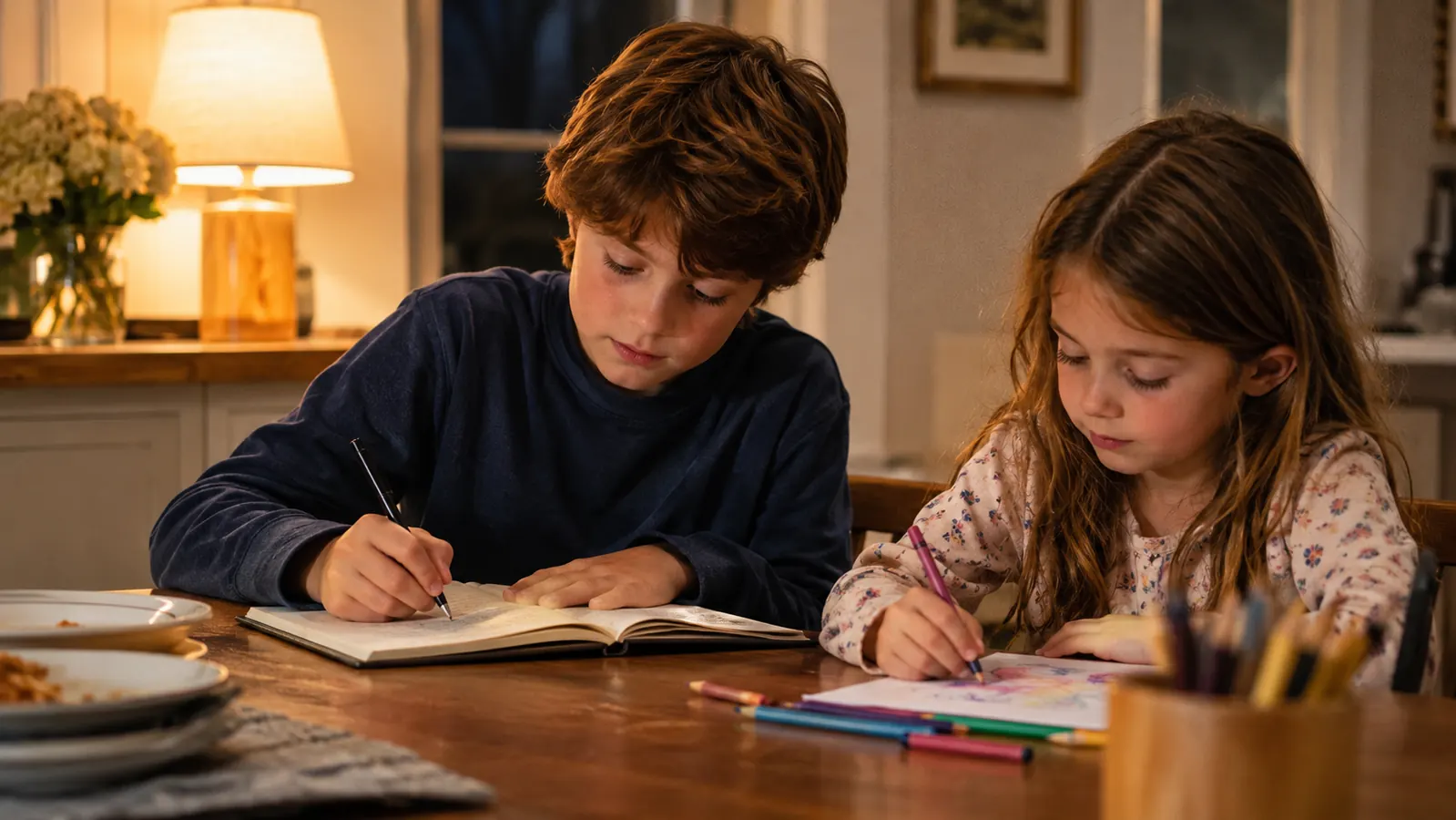
Two journals keep coming up when moms in my daughter's first grade class trade book notes, and after months with one of them and one borrowed afternoon with the other, I can tell you they are not doing the same job. My son Eli, who turned ten in May, has been writing in the Big Life Journal at our kitchen table since February. He goes about four nights a week. He has filled a little over half of it, and he skipped most of April and May when baseball took over our evenings. The Confidence Code for Girls Journal I have never owned. A friend's daughter does, and I flipped through it at their house one afternoon while the kids were in the other room. I kept thinking about it afterward, mostly because it aims at a reader my son will never be, and I still wanted to know what it does better than ours.
So here is the short answer, the one I would give you at the kitchen table. If you want one book that a six year old and a ten year old can both open on a school night without a fight, take the Big Life Journal. It is a hardcover book of 112 pages with a bookmark in it, listed for ages 5 to 11, and the whole practice is one page of prompts about the day, maybe five minutes. If you have a girl who is nine, ten or eleven and has started asking harder questions about being brave and about how girls get talked over, The Confidence Code for Girls Journal goes at that directly. The Big Life Journal does not go at that at all. That is the comparison in two sentences, and the rest of this is the detail behind it.
| Big Life Journal | The Confidence Code for Girls Journal | |
|---|---|---|
| Who it is written for | Boys and girls, listed for ages 5 to 11 | Girls, and the writing assumes a girl reader |
| How you use it | One page a night, about five minutes, then the book closes | A book a kid dips into, with more reading before the writing |
| The physical book | Hardcover, 112 pages, bookmark, about 8.27 by 5.83 inches | A workbook style journal with writing space built in |
| Talking about bravery out loud | Stays with the day the kid had | Goes straight at courage, risk and the messages girls get |
| A kid who does not love to write | Short prompts, one small page, finished before the sighing starts | Asks for more reading and more thinking first |
| Depth for an older reader | Some prompts will feel young to a ten year old | Pitched at the older end, which suits a strong reader |
Where Big Life Journal Wins
The thing this journal gets right is the size of the ask. One page. Five minutes. Eli opens the kitchen drawer, takes it out, writes, and puts it back, and on a night when he is tired or the evening got away from us, he can still finish. I have watched a lot of well meaning workbooks die because the first sitting ran twenty minutes and nobody wanted to come back for a second one. This one survives because it is small. The bookmark does more work than it sounds like it would. He knows exactly where he stopped, so starting again on a Monday after a weekend off does not turn into five minutes of flipping through pages looking for the spot.
Before this one we tried a plain spiral notebook and a printed list of questions I found online. It lasted eleven days. The notebook had no structure, so every night started with him asking me what he was supposed to write, and I never had an answer that did not sound like homework. The list was worse. Nine questions crowded onto one page meant he could see the whole thing at once and decide it was too much before he had written a word. What the Big Life Journal does differently is close the page. There is one day's worth in front of him, it is small, and the next page is not his problem yet. The physical size helps as well. At about 8.27 by 5.83 inches and an inch thick, it slides into the drawer with the napkins and the takeout menus, so it is not a thing that has to be hunted for at eight at night.
It also fits both kids on paper, which matters in a house with two of them. The listing says ages 5 to 11. Nora is six and she is not ready for it, and I will say that plainly further down, but there is nothing on or in this book that marks it as a girls' book or a boys' book, so it went to my son without a conversation about whether it was meant for him. The book itself is sturdier than I expected for something that lives in a kitchen drawer. Hardcover, a cardboard cover, and after nine months of a ten year old handling it, the corners are still square.

Where The Confidence Code for Girls Journal Wins
What the other one does that mine does not is name the world out loud. From what I saw flipping through my friend's copy, The Confidence Code for Girls Journal spends its pages on bravery, on taking a risk and coming out the other side, and on the particular noise girls get from friends, teachers and screens about how they are supposed to be. The Big Life Journal stays with the kid's own day, the good parts and the not so good parts. That is a real difference. For a girl who has already noticed that the boys get called on more, the Confidence Code journal meets her where she actually is instead of asking her to reflect on her afternoon.
One thing I noticed in that borrowed afternoon: from what I could see, the room to write sits right there on the page beside the reading, so it reads more like a workbook than a diary. My friend told me her daughter goes at it in bursts, two or three pages in a sitting and then nothing for a week, which is a very different pattern from the four nights a week we run at our table. Neither pattern is wrong. It is worth knowing which one fits your kid before you buy, because a burst reader and a habit reader are two different animals, and a nightly routine book will frustrate the first while a dip in and out book will sit untouched for the second.
It is also pitched older. My friend's daughter is eleven and it suits her. If you have a strong reader in fourth or fifth grade who finds the Big Life Journal prompts a little babyish, this would be the step up, because it asks for more thinking before any writing happens. I will be honest that I have not used it with my own child and I am not going to pretend otherwise. What I can tell you is that it is a different kind of book. Less of a nightly habit, more of a thing a girl picks up when something has happened and she wants to work it through on paper.
One page a night, and my ten year old is still at it nine months later
The Big Life Journal is a hardcover book of 112 pages with a bookmark, listed for ages 5 to 11. The practice takes about five minutes, which is the reason it survived a baseball season.
Amazon Check Today's Price on Amazon →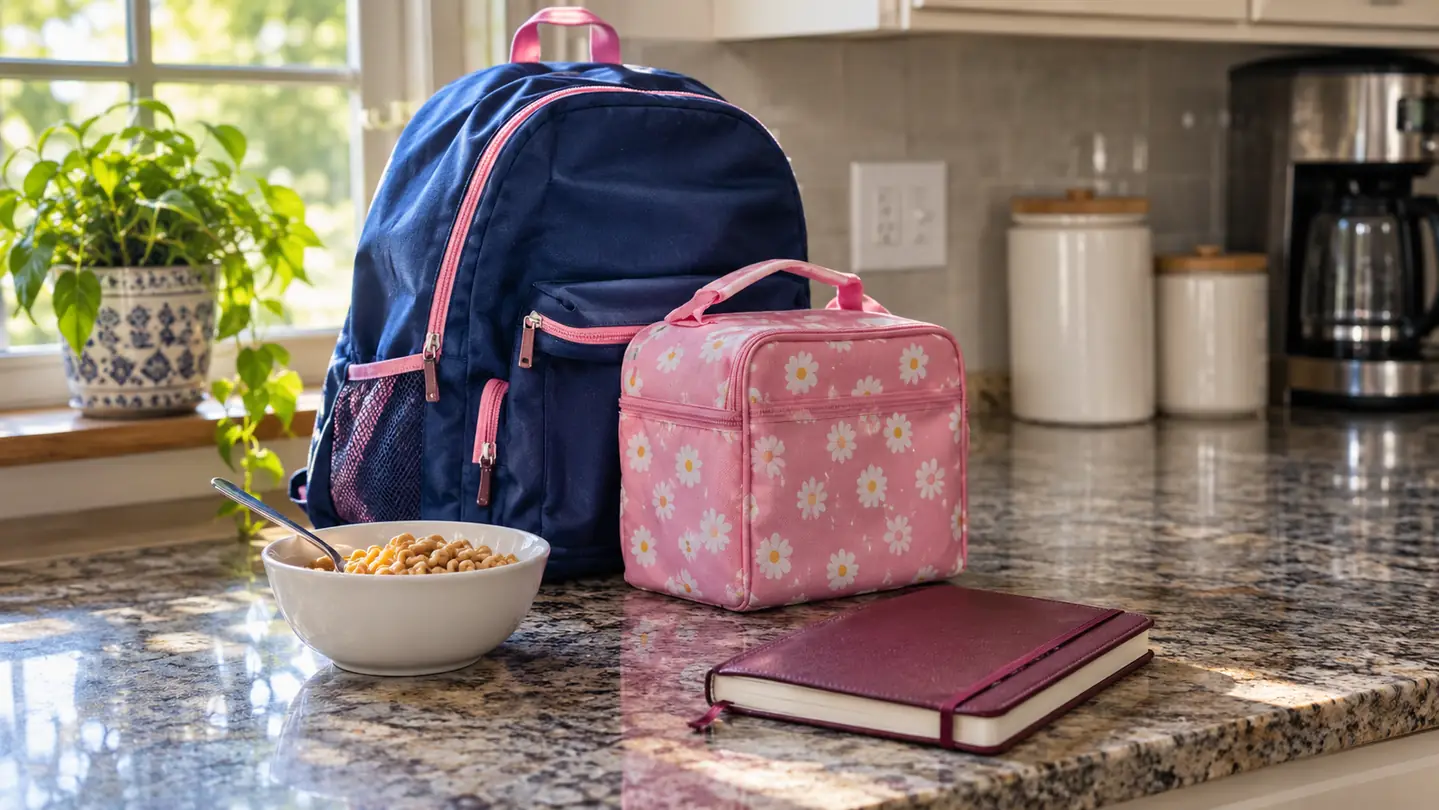
What Nine Months With the Journal Actually Looked Like
Eli writes after dinner, at the kitchen table, while I am cleaning up or folding laundry nearby. He writes about four nights a week. I do not read over his shoulder. I read what he hands me, which is not everything, and that was the deal from the start. The prompts ask about his day, the good parts and the parts that were not good, and about the way he talks to himself when something is hard. Some of them land. Some of them get a one word answer and a sigh, and I have decided that a one word answer still counts as showing up.
The first week I did sit with him, and I think that mattered more than which book it was. He was nine then, February, and the prompts about the not so good parts of the day got very short answers until I stopped watching him write and started drying dishes two feet away instead. By the second week he was writing three or four sentences without being asked. By March he was taking it out on his own on nights when I forgot to remind him, which surprised me more than anything else in this whole experiment. The kitchen drawer is the other quiet reason it works. It sits at his eye level, it is not on a shelf in his room where it would go out of sight, and taking it out costs him nothing at all.
Here is the honest part about math. In the fall of fourth grade he stopped raising his hand after one bad fractions quiz. He is in fifth grade now. By spring he was raising his hand in math now and then. He still does not do it every day, and I am not going to tell you a journal fixed that, because I do not know that and neither would you. What I can tell you is that the boy who used to say he was bad at math started writing, in his own handwriting, about practice being the point of hard things. I noticed the hand go up around the same time. That is as far as I will go.
By spring he was raising his hand in math now and then. Not every day. I will take it.
The weak stretch was April and May. Baseball, late dinners, and the book stayed in the drawer for weeks. When he picked it back up, the bookmark meant he did not have to hunt for his place, and he did not have to go back and fill in the days he missed, which I think is most of the reason he picked it up at all. A book that demands you make up lost ground is a book that stays shut. This one does not ask that. Some of the prompts still feel young to him, the ones about naming a feeling in one word, and he skips those. He is allowed.
Who Should Buy Which
Buy the Big Life Journal if you have a child between five and eleven who will sit for five minutes and you are willing to let them keep some of it private. It suits a family where the kitchen table is already where things happen. It suits a kid who does not love writing, because the ask is one page and then you are done. It suits a household with a boy and a girl, since nothing about it is aimed at one or the other. It does not suit a six year old who is still learning to form letters, and I say that as the mother of one. Nora is not ready for it. It is Eli's book, and it will be a few years before it is hers.
One more thing for the grandparents reading this, since my mother in law in Columbus asked me exactly this question in October. If you are buying for a grandchild you do not see every week, the Big Life Journal is the safer gift. It does not require the child to have a particular problem or a particular conversation waiting for them. It is a book, it takes about five minutes, and if the kid ignores it for a month nothing is lost. The Confidence Code journal is the better gift if you know the girl, know she reads above her level, and know her parents will talk it through with her. Buy that one blind and it may sit on a shelf unopened.
Buy The Confidence Code for Girls Journal if you have a girl around nine to twelve who is ready for more than a nightly page, and if you are willing to talk with her about the parts she reads. It is the better book for the girl who has started to notice how the world talks to her. It is not the book for a boy, it is not the book for a child who finds writing a chore, and if you want a routine that runs itself with almost no conversation, the Big Life Journal is the easier one to keep going. Whichever you pick, remember that it is a book. It is not a repair. My son still has rough days, and no journal on our shelf changed that.
The one that stayed in the kitchen drawer and actually got used
Hardcover, 112 pages, a bookmark, and one page a night for ages 5 to 11. Nine months in, my ten year old still opens it without being asked.
Amazon See the Big Life Journal on Amazon →