

The Big Life Journal came into our house in February 2026. My son Eli was nine then, in fourth grade, and he wrote in it eleven nights in a row. Then baseball season started and the journal went into the kitchen drawer and stayed there through most of April and May. I am opening with that because when I was deciding whether to buy it, every review I found described a child who uses it every single night, and I want you to know what the other kind of child looks like. He is not lazy. The book is not a dud. It simply takes more than a book to build a habit, and nobody puts that part in the listing.
So this is the honest version. What the Big Life Journal is, what it is not, and where it fits into a real week with a ten year old who has homework and a six year old sister and a bedtime that is always later than it should be. I am not a teacher, a counselor or a therapist. I work the front desk at a dental office in Dayton, Ohio, and I have two children, and everything below comes from nine months with one copy of this journal in one kitchen. If you are looking for the version where a book changes a child in a week, this is not that review.
The Quick Verdict
A sturdy hardcover journal with prompts that get a kid talking about his own day. Worth the money if you will sit nearby. Easy to abandon if you will not, and it will not do the work for you.
Amazon Check Today's Price →The journal is the easy part. Sitting down with him is the work.
One hardcover, 112 plain pages, a bookmark built into the binding. Five minutes a night, four nights a week, and a pencil that is not lost.
Amazon Check Today's Price on Amazon →What the Big Life Journal Actually Is
The physical object first, because that part surprised me. It is a hardcover book, 112 pages, listed at about 8.27 inches long, 5.83 inches wide and an inch thick. That is roughly the size of a paperback novel and small enough to disappear into a drawer, which it does. The cover material is cardboard under the hard binding, the bookmark is part of the book, and the listing calls the ruling plain rather than ruled. Plain is accurate. Eli's handwriting wanders across the open space like it is looking for a road.
Inside, the listing describes a five-minute daily practice with prompts about feelings, about the good and the not so good parts of a day, and about the growth mindset idea that ability grows with effort. You do not read this one to a child. The child writes in it, one short entry at a time, with you nearby. That is the entire design, and it is a good one, because for a lot of boys the writing turns out to be the conversation they were not going to have at dinner.
One thing worth flagging before you buy. The title on Amazon says ages 5 to 11. One of the listing bullets says 6 to 11. That is a real two-year gap and it matters, because a five year old and an eleven year old are not doing the same work in a journal. Eli started this at nine, near the top of the range, and some prompts still land on the young side for him. I would trust the lower number a lot less than the upper one, and I would not hand this to a kindergartner and expect it to run itself.
What Nobody Tells You About Week Three
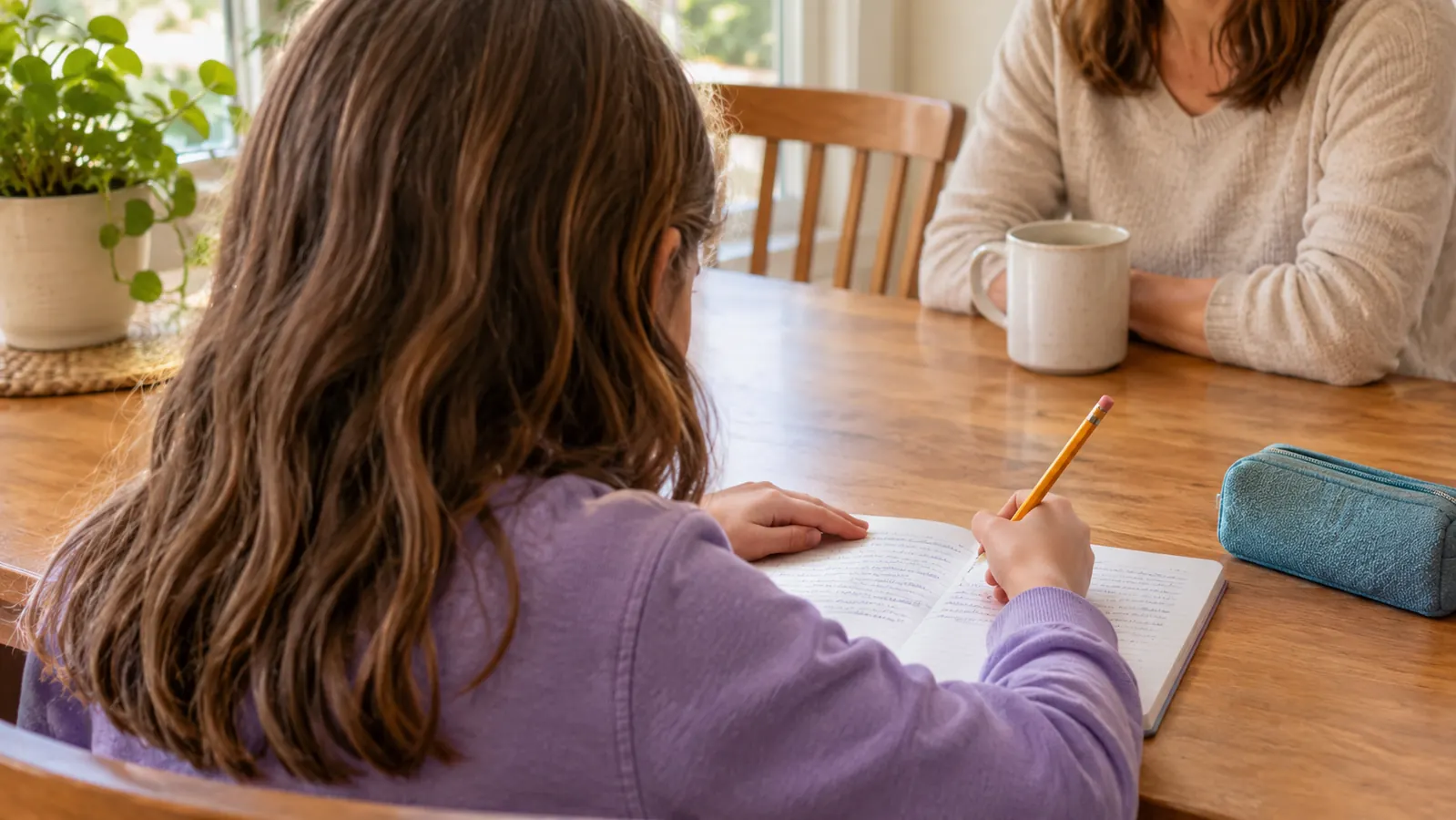
The beginning is lovely and the beginning is not the test. Nights one through eleven, Eli was at the table before I asked him. The prompts were new, the book was new, and there was a bookmark to move. Around week three the newness wore off. One night he said he would do it tomorrow. Then tomorrow happened and he said it again. If you are going to quit this journal, that is the week you quit, and it will feel like the book did not work, when what actually happened is that the novelty ran out and the habit had not formed yet.
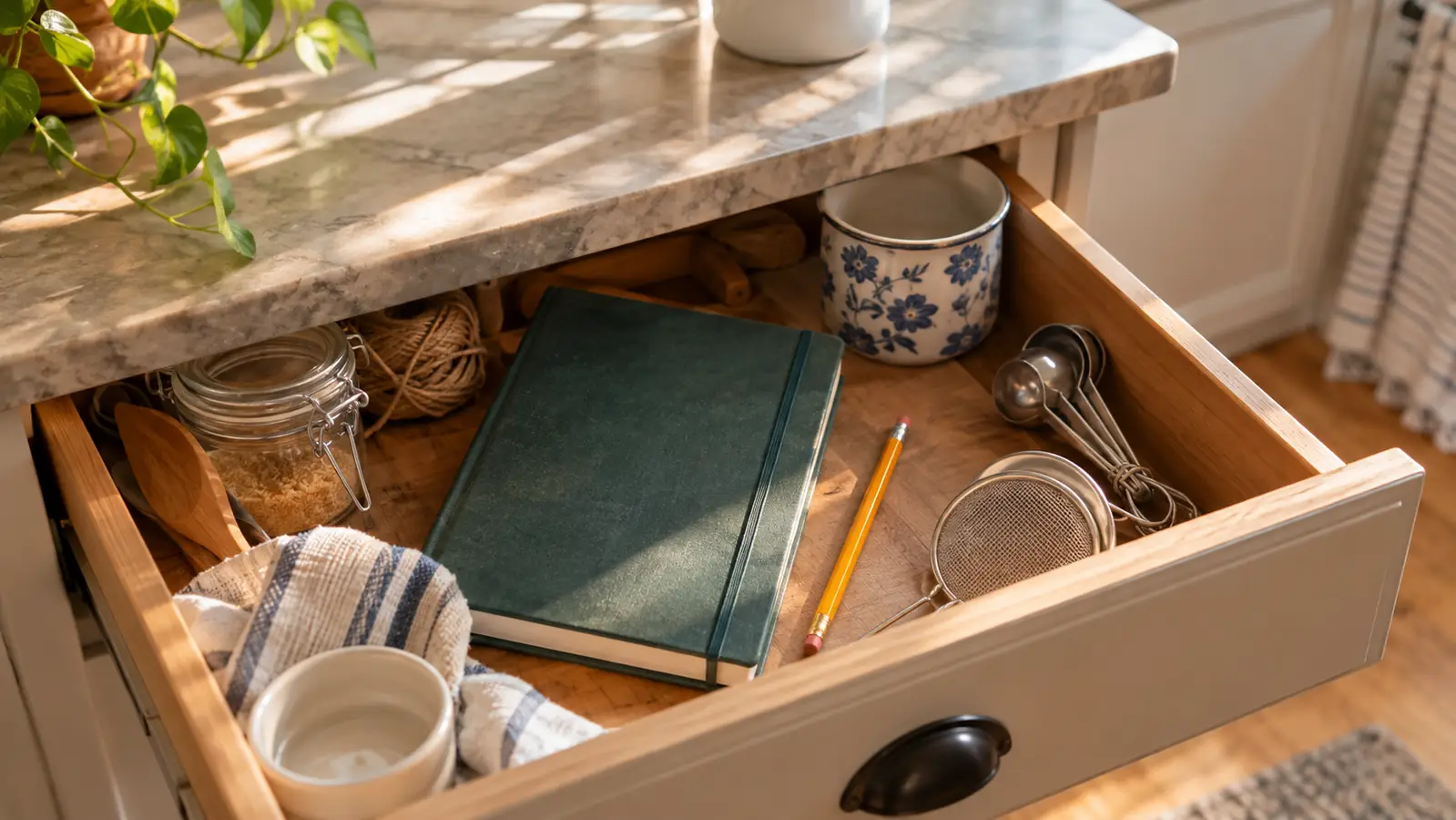
What got us past it was making the journal the opposite of homework. I did not set a timer. I did not check the page. There is no consequence in our house for a missed night and no reward for a completed one. Four nights a week is the loose shape we aim for, and there are weeks it is two. The book lives in the drawer with the takeout menus, so reopening it costs him nothing but the effort of finding a pencil that writes.
The bookmark turned out to be the most useful piece of design in the whole thing, which I did not expect. A ten year old who has to find his place will close the journal instead. A ten year old who slides a ribbon to the right page and starts writing does not have a decision to make. If you take one practical thing from this review, take that one: keep the bookmark where it belongs and never dog ear the pages.
How It Went, Month by Month
February and March were strong. He filled pages faster than I expected and I made myself stay out of it. I sit at the other end of the table with my own coffee and I do not read over his shoulder. He shows me what he wants to show me, and there is a fair amount of that journal I have never seen and will never see. I have decided that is a feature rather than a problem. A boy who knows you are going to read it is not writing the truth, and a journal that only holds the truth you approve of is a performance.
In the spring he started raising his hand in math now and then. That is the observation and I am not going to dress it up. I cannot tell you the journal did that. Fourth grade is full of things clicking on their own, and one bad fractions quiz in the fall is not a diagnosis of anything. What I can tell you is that he had a place to write the days down, including the ones where math went badly, and by spring he was a little less quick to announce that he was bad at something. That is all I have. It is not nothing, and it is not proof.
April and May are mostly a blank in that journal. Baseball three nights a week, a later bedtime, a mother who was tired too. I want to be honest that when we stopped, I was part of it. There was no dramatic reason. The drawer just stopped opening. We picked it back up in June because I set it on the table one evening and said nothing at all about it, and he wrote. No lecture, no we-are-starting-again speech. He has filled about half of it now, nine months in.
Half does not sound impressive when you type it out. I have decided half is the realistic number. He is ten, he is in fifth grade, and he writes roughly four nights a week and skips when the week gets away from us. The journal is not a routine he has mastered. It is a habit he keeps coming back to, and coming back is the skill I actually care about, more than a full book of entries written under duress.
He has filled about half of a 112 page journal in nine months. Half is not failure. Half is what a real habit looks like at our kitchen table.
Some Prompts Feel Young to a Ten Year Old
I said this once already and I will say it bigger, because it is the thing that would have annoyed me most if I had found it out after the fact. The book covers a wide age range and it shows. Some entries feel aimed at a seven or eight year old, and Eli has looked up at me more than once with a face that said, really. He is at the older end of the range and he notices when a question was written for a smaller kid.
The fix is easy and it does not require you to fix the book. He skips what does not fit. Blank pages are allowed. When a prompt feels babyish he writes about whatever the prompt reminded him of instead, and the entry still happens. A journal that has to be filled in correctly is a worksheet, and worksheets are exactly what he is already tired of by three in the afternoon. The Big Life Journal works better as a doorway than as an assignment.
What It Asks of the Parent
The journal asks five minutes of your child and a good deal more than five minutes of you. Not active time. Presence. You have to be the person at the table who is not doing anything else, and your phone has to be somewhere it cannot be reached. In February that was easy. In April, with a six year old who needed a bath and a husband on day shift who gets home around six thirty, it was the first thing I dropped, and it was very easy to tell myself that a book should take care of itself.
On money: it costs more than a plain notebook, and there is nothing wrong with a plain notebook. I want to say that plainly because a lot of reviews will not. What you are paying for is the prompts, the structure and a hardcover that survives a drawer and a backpack. If you are the kind of parent who will genuinely write five good questions every night, you can save the money and use a composition book. Most of us are not going to write five good questions every night, and that is who this book is for.
One more thing, and it is small. Nora is six and this journal is not hers. I gave it to Eli because he was the one who had stopped raising his hand, and I did not want to hand a six year old a book that is meant to be written in and watch it become a coloring project. There is a right age to start this and she is not there yet. Keeping the journal his, and not a family thing everyone touches, is part of why he still opens it.
What It Is Not
It is not a conversation replacement. There were nights this journal gave Eli a way to say something he would not have said out loud, and there were plenty of nights it was just a boy writing four lines about lunch so he could close the book. If your child will not talk to you at all, a hardcover journal is not going to open that door by itself, and I would not pretend otherwise. It gives a willing kid a place to put things. It does not create the willingness.
It is also not something to grade, correct or discuss at length. The fastest way to kill it in our house would have been for me to ask follow up questions about every entry. He offers, I read, I say something short and warm, and then I let it go. That is the whole protocol. And it is not a fix for a bad school year, a hard subject or a kid who is struggling with something bigger than fractions. If that is what you are facing, this book is a small tool and you should treat it as one.
What I Liked
- Prompts Eli can answer in five minutes without help from me
- Hardcover binding with a built in bookmark, so reopening it costs him nothing
- 112 plain pages give a kid room to write in his own hand instead of squeezing into lines
- Small enough at roughly 8 by 6 inches to live in a kitchen drawer where it actually gets used
- Gives a ten year old a place to write down the bad days as well as the good ones
Where It Falls Short
- Easy to abandon around week three, once the newness wears off
- Some prompts feel young at the older end of the age range
- Costs more than a plain notebook, and a plain notebook does the same job if you supply the questions
- The age range is inconsistent across the listing, which makes it hard to judge the fit
- Needs a parent nearby, and that is the piece that falls off first in a busy week
Who This Is For
It is for a child roughly eight to eleven who will sit with a book for five minutes and write four or five lines, and for a parent willing to be in the same room without supervising. It fit Eli because he is a writer by temperament, he likes a hardcover, and he is old enough to see the point of writing a day down. If your child is verbal and a little reflective, this is a good match. It also suits a kid who is coming off a rough stretch at school and does not want to talk about it at the dinner table, because for that kid the writing is the talking.
Who Should Skip It
Skip it if your child is five or six. The low end of the range on the cover says they are old enough and I do not think they are, at least not without you sitting knee to knee and writing most of it for them. Skip it if you are buying it to be the one thing that turns a bad subject around, because it will not, and you will end up blaming the book for a job it never had. Skip it if you already know you will not sit at that table, or if a plain notebook and a pencil is what your house will actually use. None of that is a knock on the Big Life Journal. It is just a plain description of who has the room for it.
Nine months in, I would buy it again. Not because it fixed anything, and not because Eli writes every night, but because there is a record in a kitchen drawer of what a ten year old thought about his own days, in his own handwriting, and because he has learned that going back to something you dropped is allowed. That lesson was worth the book for our family. Your ten year old may be a different kid entirely, and if he is, you will know by week three.
Buy it for the kid who will actually write in it. Not the one you wish would.
A hardcover journal, 112 plain pages, one bookmark, about five minutes a night. Have a pencil ready and stay at the table.
Amazon Check Today's Price on Amazon →